Epoxy Flooring in Bahrain: Heat-Resistant Finish
For industrial facilities in Hidd and modern villas in Saar, standard concrete and tile floors often fail under Bahrain's intense 45°C+ summer heat and heavy structural loads. When a concrete slab absorbs extreme heat, it expands. If a rigid, low-grade coating is applied on top, this expansion causes the surface to blister, crack, and eventually flake away.
Our epoxy flooring bahrain service delivers a specialized, thermal-shock resistant coating designed specifically for high-temperature and high-humidity environments. We transform cracking, dusty surfaces into seamless, high-gloss floors that withstand heavy impacts, chemical spills, and extreme Gulf climates. Review our installation process and material specifications below to determine if our industrial-grade resin systems match your facility's requirements.
High-Temperature Epoxy Resin Systems: What Our Installation Includes
A successful epoxy installation is not about the paint; it is entirely about substrate preparation and chemical bonding. If the resin cannot penetrate the concrete pores, the floor will fail within six months.
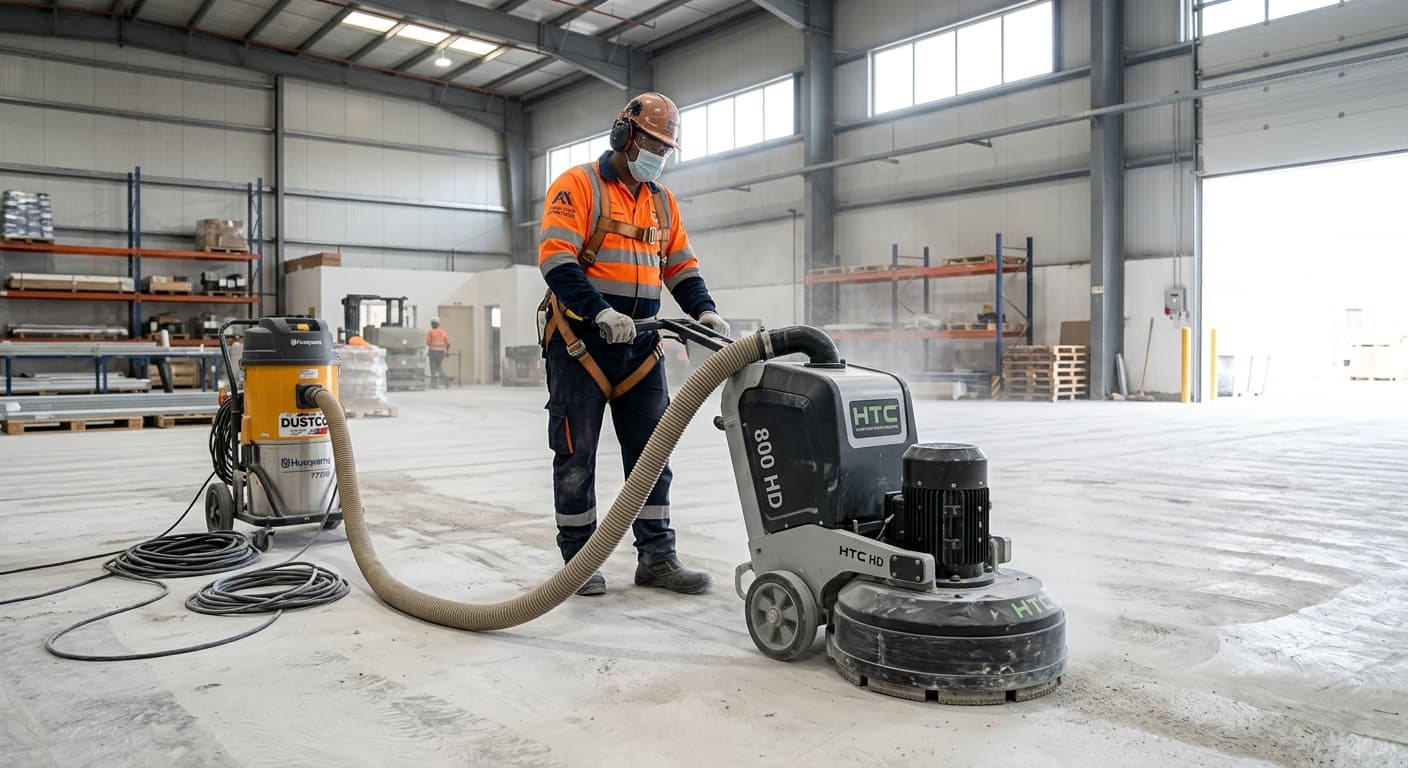
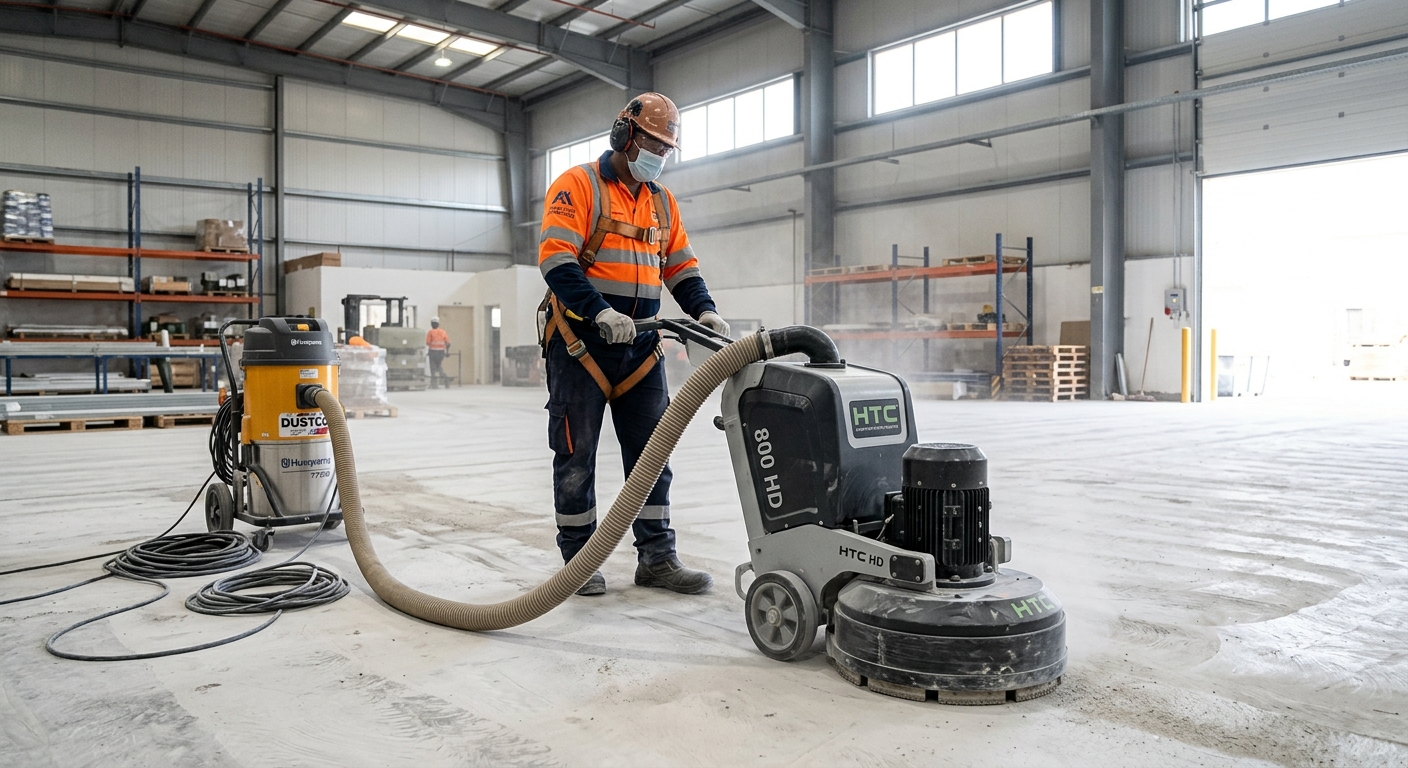
Diamond Grinding and Concrete Surface Profiling
We do not use acid etching. In Bahrain's climate, acid etching often leaves a high-pH moisture residue that prevents the epoxy from curing properly. Instead, we use heavy-duty planetary diamond grinders to remove the top layer of concrete (laitance).
- The Mechanism: Grinding opens the concrete pores to a Concrete Surface Profile (CSP) of 3 or 4, which feels like medium-grit sandpaper.
- Why it Matters: This physical texture allows the base coat to wick into the concrete matrix, creating a mechanical bond rather than just sitting on the surface. If you skip this step, hot forklift tires or car tires will physically rip the coating off the floor.
Moisture Vapor Barrier Application for High-Humidity Slabs
Reclaimed land areas in Bahrain, such as Diyar Al Muharraq or the Bahrain Investment Wharf, frequently suffer from high water tables. Moisture vapor travels upward through the concrete slab via hydrostatic pressure.
- When it is required: If our moisture meter detects a Moisture Vapor Emission Rate (MVER) above 4 pounds per 1,000 square feet, a standard epoxy primer will blister.
- The Solution: We apply a specialized moisture-mitigating epoxy primer. This creates a dense, impermeable layer that holds back up to 20 pounds of hydrostatic pressure, preventing the topcoats from delaminating.
Thermal-Shock Resistant Aliphatic Urethane Topcoat Installation
Standard epoxy is highly durable but performs poorly under direct sunlight. UV rays break down the aromatic chemical bonds in basic epoxy, causing it to turn a chalky yellow within weeks.
To prevent this, our epoxy flooring bahrain installations include an aliphatic polyurethane topcoat.
- The Tradeoff: Urethane topcoats add approximately 15-20% to the total project cost.
- What you get: You gain complete UV stability (no yellowing) and significantly higher scratch resistance. If your facility has skylights or open bay doors, this topcoat is mandatory to prevent aesthetic degradation.
Specialized Flooring for Bahrain's Industrial and Commercial Sectors
Different operations require distinct resin formulations. Applying a residential-grade epoxy in a commercial setting leads to rapid structural failure.
Manufacturing Plants and Heavy-Duty Warehouses in Sitra
Facilities operating 3-ton forklifts require high-build, 100% solids epoxy systems applied at a minimum thickness of 2 to 3 millimeters (mils).
What facility managers often underestimate is point-load stress. When a heavy forklift pivots its tires while stationary, the sheer force will tear thin-mil coatings. We incorporate quartz sand broadcast layers into the base coat to increase the compressive strength of the floor from the standard 3,000 PSI of concrete to over 10,000 PSI.
Commercial Kitchens Requiring 120°C Spill Resistance
Standard epoxy begins to soften at 60°C. If a commercial fryer leaks or a boiling vat spills in a restaurant kitchen, standard resin will melt and peel.
For food and beverage facilities, we do not use traditional epoxy. We install Urethane Cement. This specialized hybrid expands and contracts at the exact same rate as the concrete beneath it. It can withstand direct thermal shocks of up to 120°C without breaking its bond, making it the only viable choice under Bahrain's Ministry of Health safety regulations for heavy commercial kitchens.
Residential Garages and High-Traffic Villa Driveways
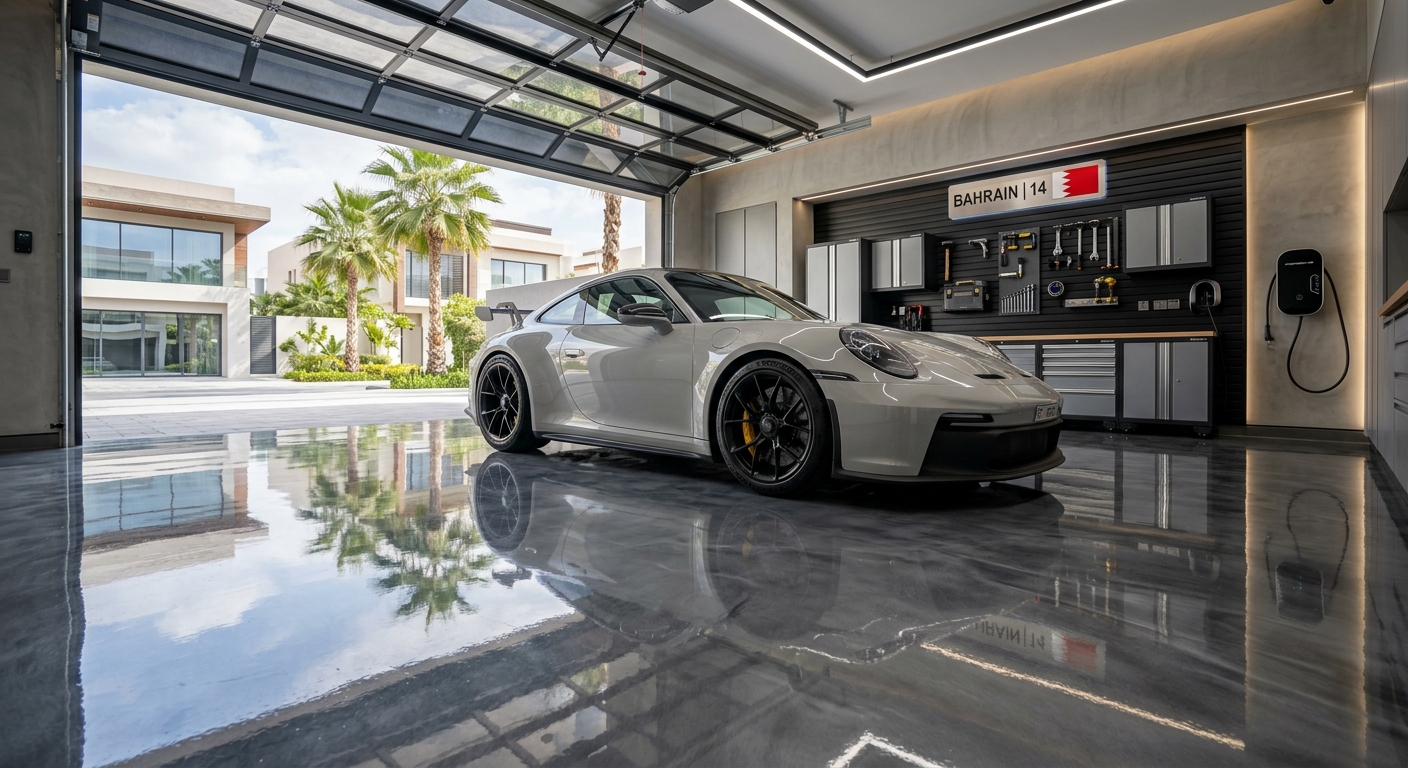
The most common failure in residential garage floors is "hot tire pickup." When you drive your car in July, the tires heat up significantly. When you park, the heat transfers to the floor, causing the tires to expand. As they cool, they contract and grip the floor.
If you use cheap hardware store epoxy paint, the contracting tire will rip the paint directly off the concrete. Our residential epoxy flooring bahrain systems utilize industrial-grade polyaspartic topcoats that are chemically immune to hot tire pickup, ensuring your garage floor remains intact.
The 4-Step Application Protocol for Extreme Gulf Climates
Epoxy is a two-part chemical reaction that is highly sensitive to temperature and humidity. Our installation process is strictly controlled to prevent premature curing.
Step 1: Substrate Moisture and Ambient Temperature Testing
Before any material is mixed, we test the slab. If the ambient temperature inside the facility exceeds 35°C, the epoxy will "flash cure" in the bucket within 10 minutes, making it impossible to apply. In peak Bahrain summer, we often schedule pours during night shifts to ensure a workable temperature window.
Step 2: Structural Crack Repair and Expansion Joint Filling
Pouring epoxy directly over a cracked floor guarantees the crack will reappear (telegraph) through the new finish within a month. We chase all existing cracks with a diamond V-blade, vacuum the debris, and fill them with a flexible polyurea joint filler. This allows the concrete slab to shift slightly during temperature changes without snapping the rigid epoxy above it.
Step 3: Multi-Layer Resin Pouring and Squeegee Leveling
We do not roll the base coat on like paint. We pour the 100% solids resin directly onto the floor in ribbons and pull it at a controlled thickness using a notched squeegee. This ensures a uniform self-leveling thickness of at least 20-30 mils, hiding minor concrete imperfections and creating a glass-smooth base.
Step 4: 72-Hour Controlled Curing and Final Load-Testing
A common mistake facility managers make is reintroducing traffic too early.
- At 24 hours: The floor is safe for light foot traffic.
- At 48 hours: The floor feels hard, but the chemical cross-linking is only 70% complete.
- At 72 hours: The floor reaches full chemical cure.
If you drive a forklift on the floor at hour 48, you will permanently indent the resin. You must plan for a strict 3-day operational downtime.
Epoxy Flooring Costs in Bahrain: Pricing Tiers and Site Assessment
Pricing for epoxy flooring bahrain projects is calculated per square meter and depends heavily on the condition of your existing slab.
Base Installation Costs (Starting at 4 to 8 BD per Square Meter)
- 4 to 5 BD per sqm: Standard solid-color, thin-mil epoxy system suitable for light manufacturing, pedestrian traffic, and clean rooms.
- 6 to 8 BD per sqm: High-build, multi-layer systems utilizing urethane topcoats, quartz slip-resistant broadcasting, or polyaspartic fast-cure resins. Recommended for heavy forklift traffic and automotive garages.
Price Variables: Existing Floor Damage and Metallic Pigment Add-Ons
The base price assumes a relatively healthy, bare concrete slab. Your costs will increase if:
- Heavy grinding is required: Removing thick layers of old, failing factory paint or heavy oil saturation requires specialized tooling and adds 1-2 BD per sqm.
- Aesthetics: Metallic epoxy floors, which use mica pigments to create a marbled, 3D effect, require distinct pouring techniques and typically push costs toward the 8-10 BD per sqm range.
How to Schedule Your On-Site Substrate Inspection
We do not provide blind estimates over the phone because a visual inspection cannot detect structural moisture. During our site visit, we will conduct a calcium chloride moisture test, map out necessary crack repairs, and determine the exact required thickness based on your daily operational loads.
Frequently Asked Questions About Epoxy Durability in Bahrain
Will the epoxy yellow under intense UV exposure from skylights?
Standard epoxy absolutely will yellow. If your facility has skylights, open loading docks, or large windows, you must upgrade to an aliphatic polyurethane or polyaspartic topcoat. These topcoats act as a sunscreen for the floor, completely blocking the UV degradation that causes ambering and chalking.
What is the exact cleaning protocol for engine oil and chemical spills?
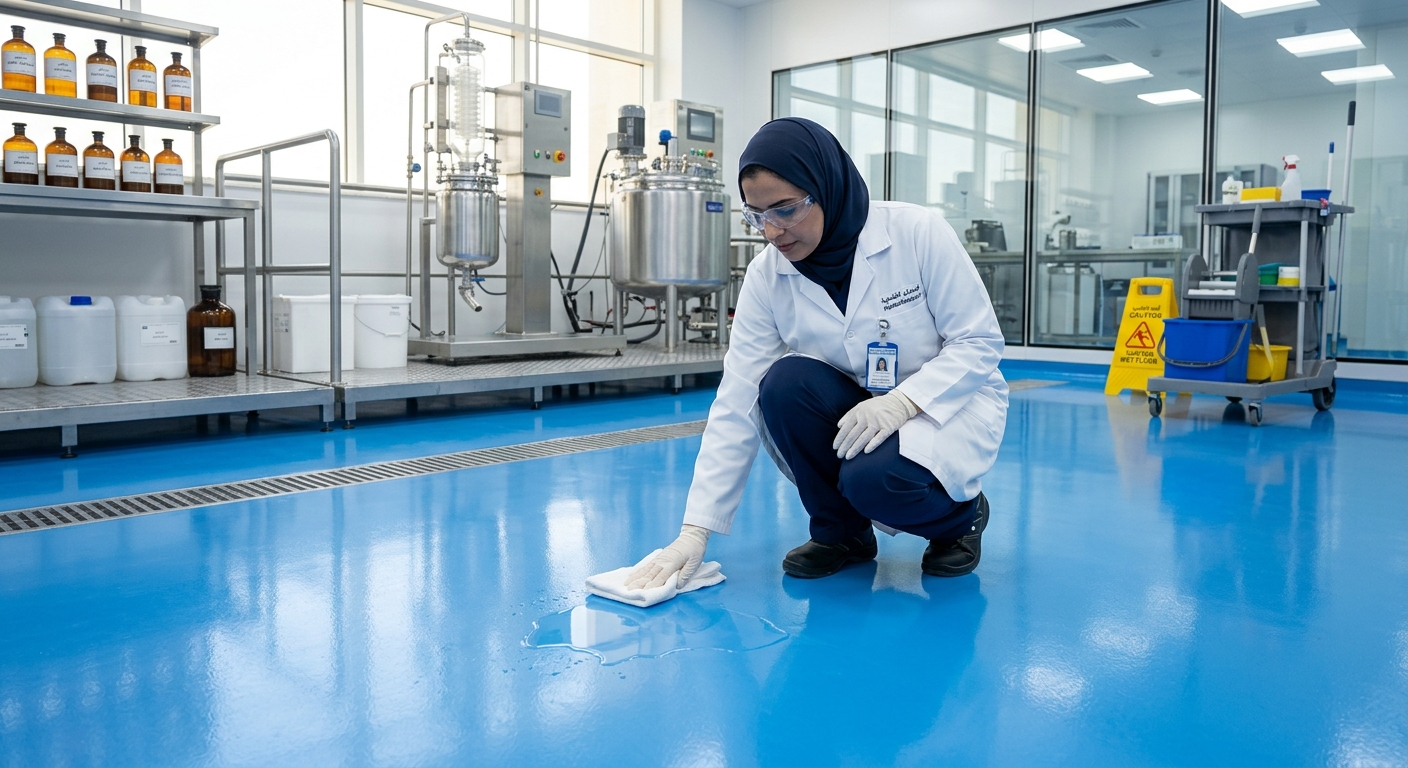
Epoxy is non-porous, meaning oil sits on the surface rather than soaking in. However, you must avoid highly acidic cleaners or harsh citrus degreasers, as these will slowly dull the high-gloss finish over time.
- The Protocol: Clean spills promptly using a pH-neutral floor cleaner and a soft-bristle deck brush or auto-scrubber.
- What to avoid: Never use stiff wire brushes or abrasive pads, which will create micro-scratches in the topcoat.
Can you install the resin system directly over existing ceramic tiles?
Technically yes, but we strongly advise against it for commercial applications.
- The Risk: Even if we grind the tile glaze off to ensure a bond, the grout lines between the tiles will eventually "telegraph" through the epoxy as faint grid lines. Furthermore, if the original tiles have hollow spots or weak adhesive, the epoxy will pull them up as it cures and shrinks.
- The Recommendation: For a permanent, structural solution, we require removing the tiles down to the concrete substrate.
Conclusion
Upgrading to a heat-resistant epoxy floor protects your concrete substrate from thermal shock, chemical degradation, and heavy forklift traffic. Whether you are managing a logistics warehouse in the Bahrain Investment Wharf or upgrading a residential garage in Saar, selecting the correct resin system prevents costly structural repairs down the line.
Ignoring moisture vapor transmission or opting for cheap, thin-mil paints will result in a floor that blisters and peels within a single Bahraini summer. Book a site inspection today to evaluate your floor's moisture levels, assess its load-bearing requirements, and receive a detailed project specification tailored to your specific environment.