What Is an Epoxy Kitchen? (Why It Matters in Bahrain)
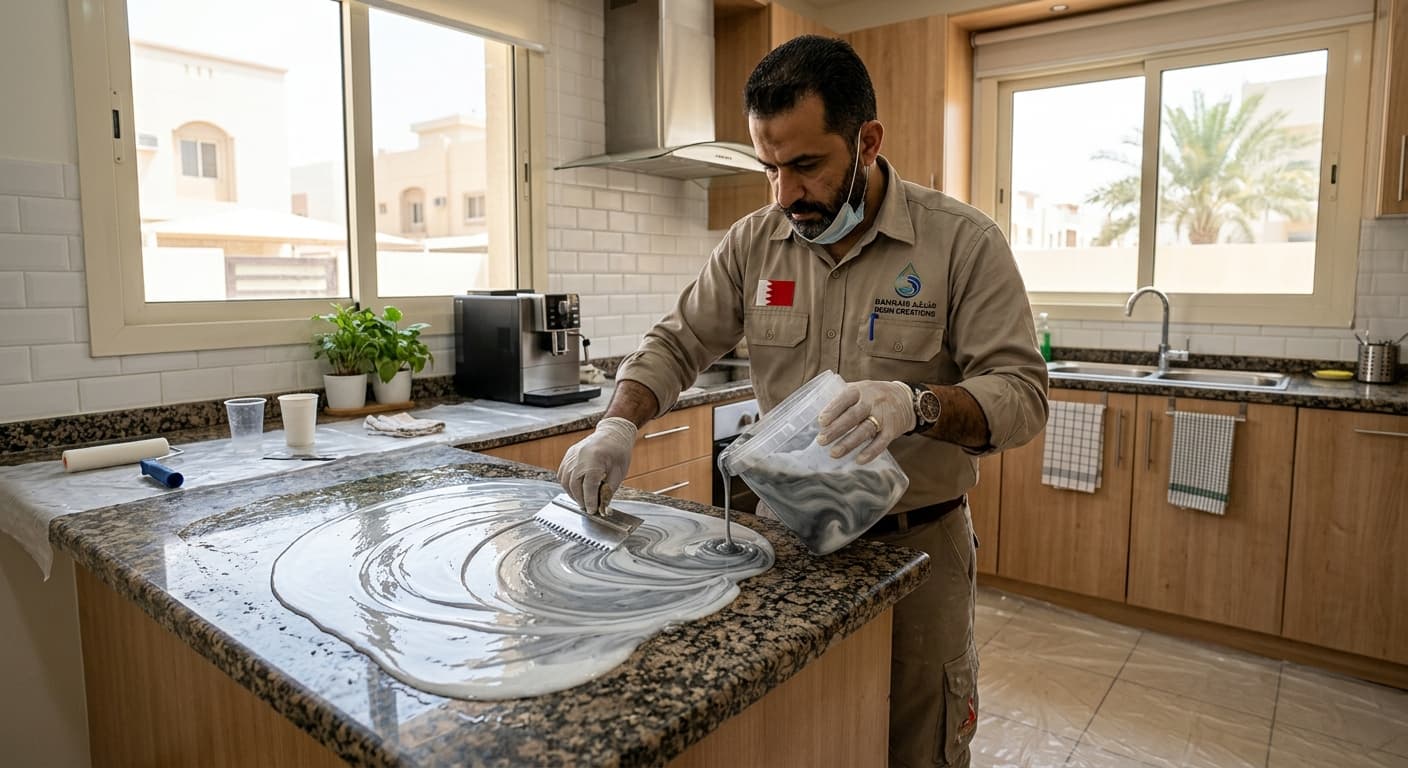
Imagine spending thousands of Dinars on a natural marble kitchen countertop, only to watch it permanently stain from a spilled cup of Arabic coffee or crack under the heavy use of daily cooking. An epoxy kitchen involves applying a specialized, hardening resin over existing surfaces like countertops or floors to create a seamless, non-porous, and highly resilient shield.
Homeowners in Bahrain typically search for this solution when deciding whether to replace aging surfaces or upgrade them without enduring a massive demolition bill. Understanding how this chemical coating interacts with the Gulf's high humidity and heavy kitchen traffic shifts the choice from a purely aesthetic decision to a strategic, long-term property investment.
If you are weighing the cost of a full kitchen remodel against resurfacing, you need to know exactly how epoxy behaves under the stress of hot pots, heavy spices, and shifting temperatures.
Beyond the Gloss: The Reality of Epoxy Kitchen Surfaces
An epoxy kitchen is not a type of pre-manufactured countertop you buy from a showroom. It is an on-site structural application where liquid resin bonds to your existing architecture, curing into a solid plastic-like shell.
The two-part resin and hardener chemical reaction
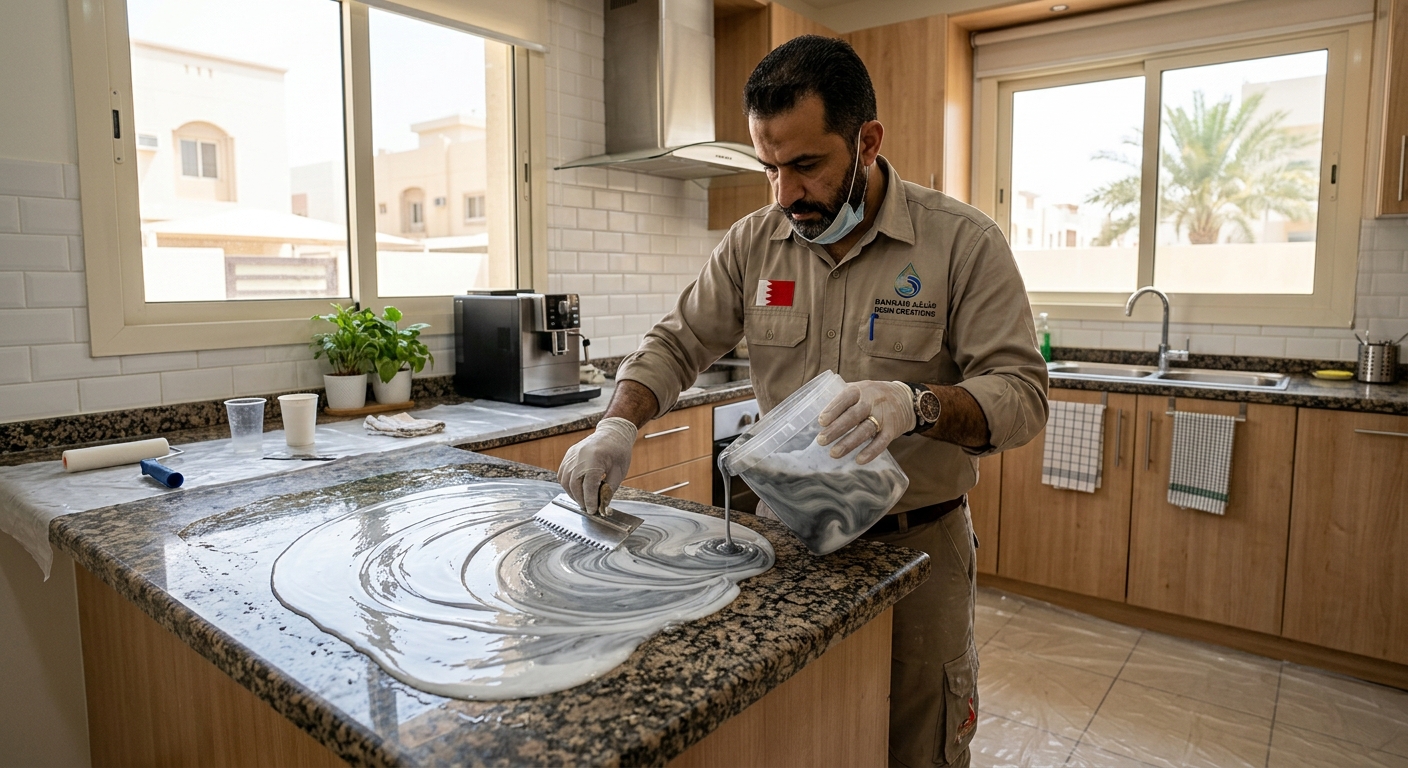
Epoxy relies on a precise chemical reaction between a liquid resin and a hardener. When mixed, these two components cross-link at a molecular level, transforming from a pourable liquid into a rigid polymer. If the mixing ratio is off by even a few percentage points, the surface will never fully harden, leaving you with a permanently sticky countertop that attracts dust and dents under the weight of appliances.
Transforming existing MDF, concrete, or aging tile
The primary financial advantage of epoxy is its ability to use your current kitchen as a substrate. Instead of paying laborers to rip out outdated ceramic tiles or scratched MDF cabinets, the resin is poured directly over them. However, epoxy cannot fix structural failure; if your underlying MDF is swollen from water damage or your tiles are loose, the epoxy will eventually crack along those weak points.
Seamless barrier creation against high-humidity environments
Bahrain's summer humidity routinely exceeds 80%, creating an ideal environment for mold to breed in the porous grout lines of traditional tile counters and floors. Epoxy cures into a completely seamless surface with zero joints or seams. This eliminates the physical spaces where moisture, bacteria, and food particles accumulate, drastically reducing the time required for daily kitchen maintenance.
The Anatomy of the Pour: How Liquid Resin Becomes Solid Armor
The durability of an epoxy surface is entirely dependent on the physical and chemical mechanisms of its application. A poor installation will peel off like a cheap sticker within months.
Surface preparation and the critical bonding phase
Epoxy does not stick to smooth, glossy surfaces. To create a mechanical bond, the existing countertop or floor must be aggressively sanded or ground down with diamond blades to create a rough profile. If a contractor skips this step to save time, the resin will only sit on top of the surface rather than anchoring into it, leading to catastrophic delamination the first time you drop a heavy pan.
The exothermic curing reaction explained
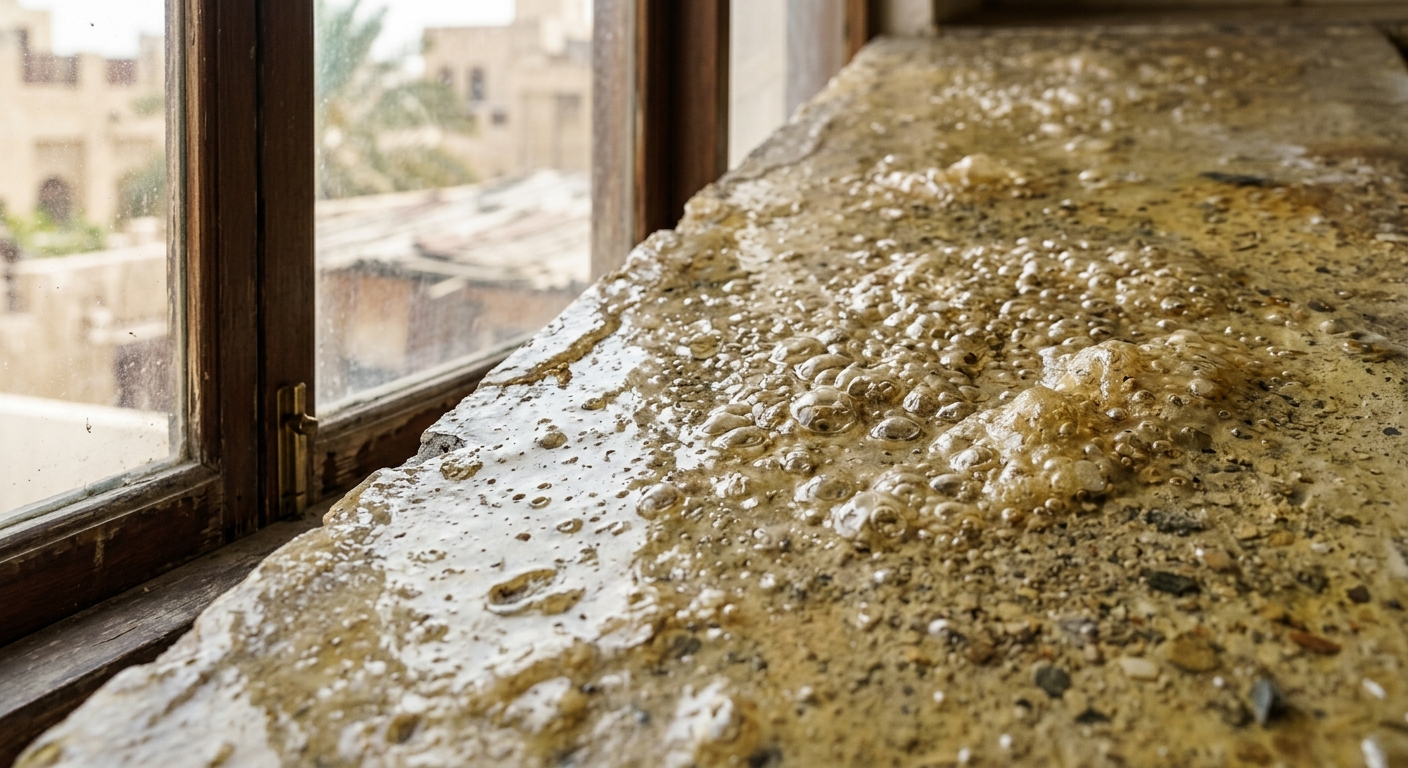
As epoxy cures, it undergoes an exothermic reaction, meaning it generates its own heat to harden. The thicker the pour, the hotter it gets. If poured too thick in a single pass, the resin can literally boil itself, trapping thousands of tiny air bubbles inside the finish and ruining the structural integrity of the counter.
Creating the non-porous seal that blocks moisture and bacteria
Once fully cured, the cross-linked polymer chains form a microscopic barrier that liquids cannot penetrate. When you spill saffron-infused water, raw chicken juice, or dark soy sauce, the liquid remains entirely on the surface. Unlike granite or marble, which require bi-annual chemical sealing to prevent permanent staining, a properly cured epoxy surface requires no ongoing sealant maintenance.
Where Epoxy Fails: Debunking the Indestructible Myth
Contractors often sell epoxy as an indestructible miracle surface. It is not. Understanding its exact failure modes will dictate whether an epoxy kitchen makes sense for your cooking habits.
The DIY disaster: Why 35°C ambient summer heat ruins curing times
Many homeowners attempt to save money by buying DIY epoxy kits, only to ruin their kitchens because they ignore ambient temperature constraints. Epoxy's working time is dictated by heat. In a Bahraini kitchen without aggressive AC running at 20°C, a 35°C ambient temperature will cause the epoxy to "flash cure." It will solidify in the mixing bucket before you can pour it, or harden on the counter before it levels out, leaving a lumpy, unusable surface.
Scratch resistance versus scratch-proof realities
Epoxy is highly resistant to blunt impact, meaning dropping a coffee mug likely won't chip it. However, it is fundamentally a plastic polymer, meaning it is susceptible to micro-scratches. Sliding rough unglazed ceramic bowls across the counter or cutting directly on the surface with a chef's knife will leave visible scratches. If you refuse to use cutting boards, epoxy is the wrong choice for your home.
The yellowing effect from direct UV exposure through kitchen windows
Standard epoxy resins are highly vulnerable to ultraviolet light. If your kitchen features large windows that cast direct sunlight onto the countertops, a clear epoxy topcoat will begin to turn a hazy yellow within six to twelve months. To prevent this, you must specify that your contractor uses an aliphatic polyurethane or polyaspartic topcoat, which contains UV inhibitors, though this will increase the project cost.
The Financial and Functional Impact of Choosing Epoxy
Deciding to install an epoxy kitchen comes down to a harsh comparison of costs, downtime, and daily usability against traditional stone or tile.
Cost comparison: BD 30-50 per square meter versus imported Italian marble
A professional epoxy pour over existing countertops typically costs between BD 30 and BD 50 per square meter in Bahrain, depending on the complexity of the design. In contrast, mid-range imported quartz or marble starts at BD 120 per square meter, plus the cost of demolition and disposal of your old counters. Epoxy allows you to allocate that saved budget toward better appliances or custom cabinetry.
Handling heavy-duty cooking: Resisting spices, hot oils, and turmeric stains
Traditional Bahraini cooking involves heavy use of turmeric, hot oils, and rich spices that notoriously stain natural stone. Epoxy resists these chemical stains exceptionally well, provided they are wiped up within a reasonable timeframe. However, epoxy fails under extreme heat. Placing a boiling pot of machboos directly from the stove onto an epoxy counter will scorch the resin, leaving a permanent clouded ring. You must use trivets.
Turnaround time: Avoiding 3-week demolition projects
Ripping out old countertops and floors, waiting for custom stone fabrication, and installing new cabinets usually puts a kitchen out of commission for three to four weeks. Resurfacing with epoxy bypasses the demolition phase entirely. A professional crew can prep, pour, and cure an epoxy kitchen setup in three to four days, minimizing the disruption to your household's daily routine.
Practical Upgrades: Where Epoxy Makes the Most Sense
Epoxy is highly versatile, but it provides the highest return on investment in a few specific scenarios.
Resurfacing faded granite countertops to mimic white quartz
If you have structurally sound but visually outdated brown or green granite counters from the early 2000s, epoxy can completely mask them. Contractors use a white tinted resin base and drag grey metallic pigments through the wet pour to replicate the veining of high-end Calacatta marble or bright white quartz. You get the modern, bright aesthetic without the massive weight and cost of actual stone.
Pouring seamless, slip-resistant kitchen flooring for high-traffic homes
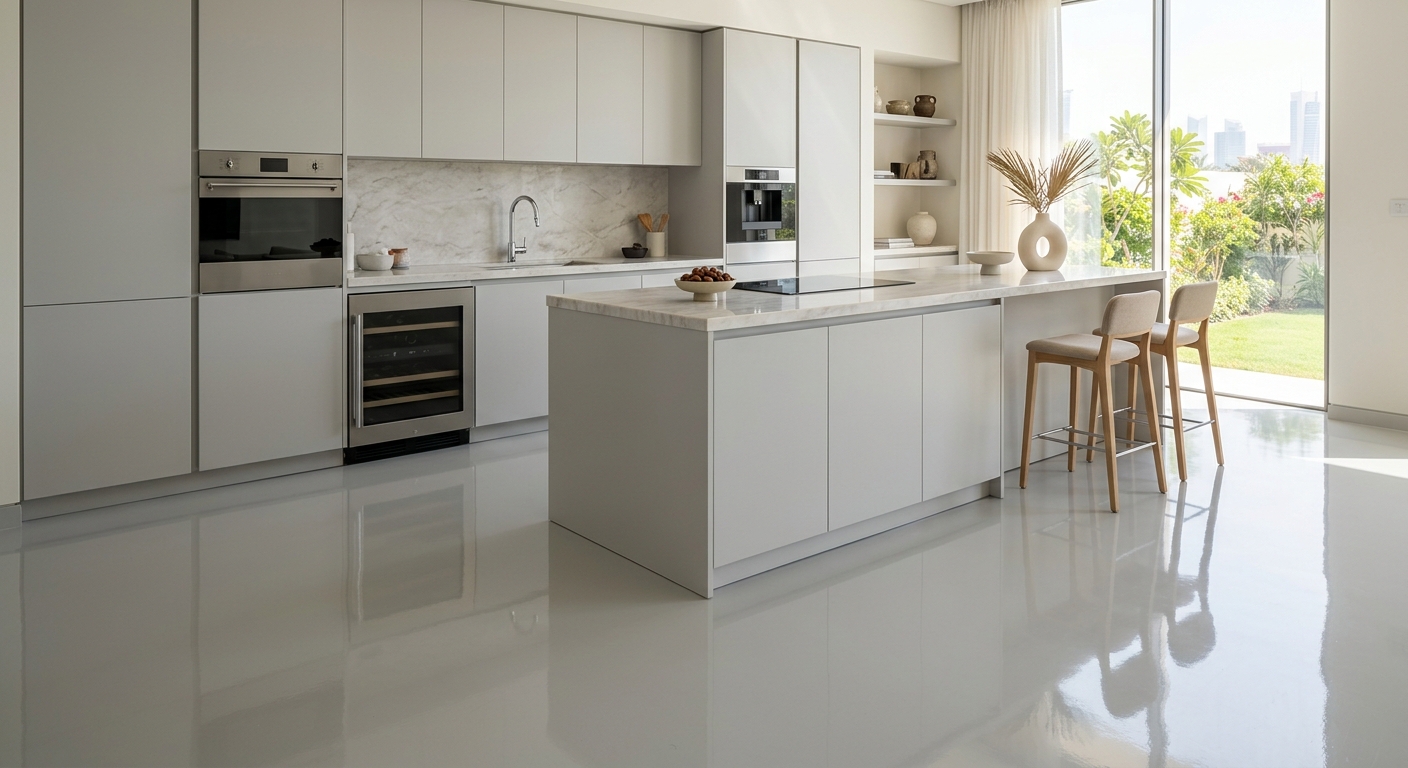
Kitchen floors endure constant spills, dropped food, and heavy foot traffic. Pouring an epoxy floor creates a waterproof basin that is incredibly easy to mop clean. Because high-gloss epoxy becomes dangerously slippery when wet, contractors must broadcast silica sand or polymer flakes into the topcoat during the final curing stage to provide necessary mechanical grip for wet environments.
Creating custom kitchen islands with metallic resin pours
For homeowners wanting a centerpiece, epoxy allows for custom metallic pours on kitchen islands. By mixing metallic powders into the resin, the surface cures with a three-dimensional, flowing aesthetic that mimics liquid metal or deep ocean water. While striking, you should avoid overly aggressive colors (like bright blues or reds) if you plan to sell the house in the next five years, as highly personalized designs alienate potential buyers.
Conclusion
The real value of an epoxy kitchen lies in leveraging chemistry to bypass the exorbitant costs of traditional demolition, disposal, and material replacement. If you have structurally sound but visually outdated counters, and a renovation budget under BD 500, professional epoxy resurfacing is the most logical choice.
However, this material requires behavioral adjustments. If your cooking style involves placing boiling pots directly onto the counter, or if you refuse to use cutting boards, natural stone remains the safer, albeit more expensive, investment. Before committing to a contractor, demand a detailed quote that outlines the surface preparation methods and explicitly includes a UV-stable polyaspartic topcoat to ensure your new kitchen survives Bahrain's intense sunlight and heavy daily use.