What Are Epoxy Systems? (And Why They Matter in Bahrain)
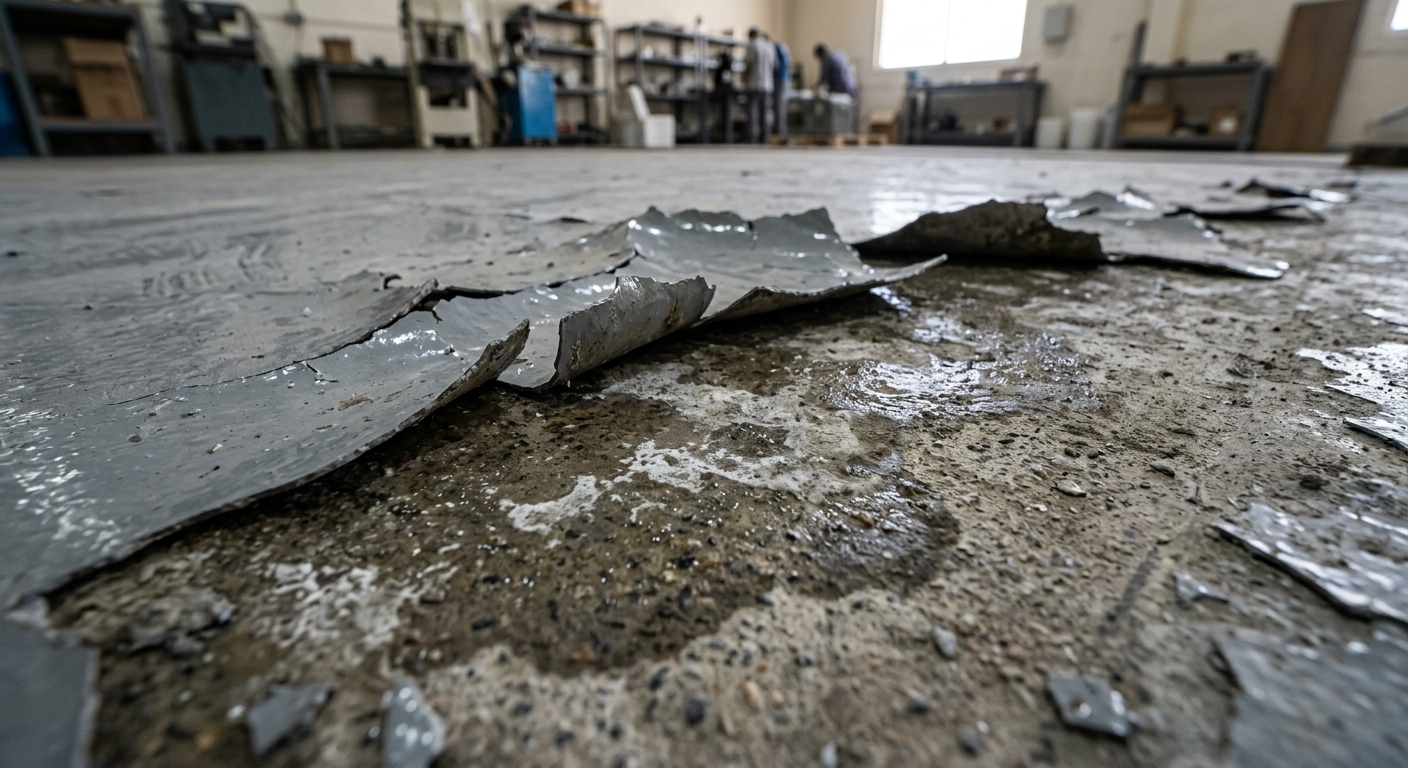
Imagine investing thousands in a new commercial space in Manama, only to watch the floor peel away in large, rubbery sheets after its first humid summer. This happens constantly across the island because property owners confuse surface paint with structural floor protection.
An epoxy system is a chemically engineered surface created by mixing a resin and a hardener to form a seamless, highly durable, plastic-like barrier over concrete. Property owners and facility managers in Bahrain search for this solution to stop concrete dusting, resist industrial chemical spills, and survive the Gulf's extreme temperature shifts. Understanding how these chemical layers interact is the difference between a floor that lasts twenty years and one that fails in less than six months.
What an Epoxy System Actually Means for Your Floor
The most expensive mistake you can make is treating epoxy like standard floor paint. Paint dries through the evaporation of water or solvents, leaving a thin film resting on top of the concrete. Epoxy does not dry; it cures.
Why the 'System' Component Matters More Than the Material
When contractors quote "epoxy systems," they are not selling a single bucket of liquid. They are proposing a multi-step chemical assembly. A true system requires a primer to penetrate the concrete, a body coat to build thickness and impact resistance, and a topcoat to handle abrasion. If a contractor proposes a "one-coat epoxy solution," you are paying for temporary floor paint that will delaminate the first time a forklift drags a heavy pallet across it.
The Chemical Cross-Linking Process Explained
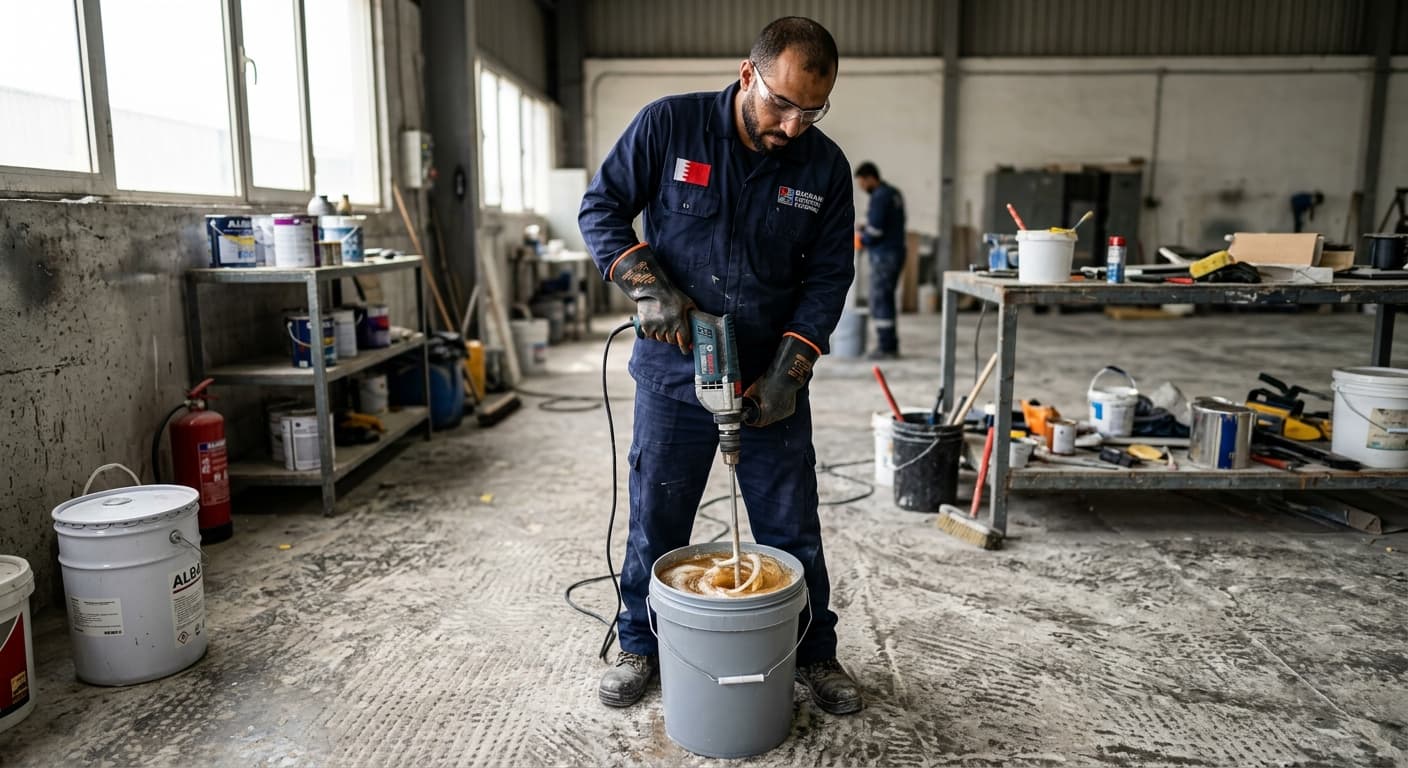
The durability of these floors comes from a process called chemical cross-linking. When you mix the epoxide resin with the polyamine hardener, the short, disconnected molecules snap together into long, tightly woven polymer chains. This dense molecular structure is what stops motor oil, battery acid, or restaurant grease from penetrating the surface. If the mixing ratio is off by even a few percentage points, these chains fail to connect, leaving you with a sticky floor that never fully hardens.
Adapting the Resin-to-Hardener Ratio for Gulf Climates
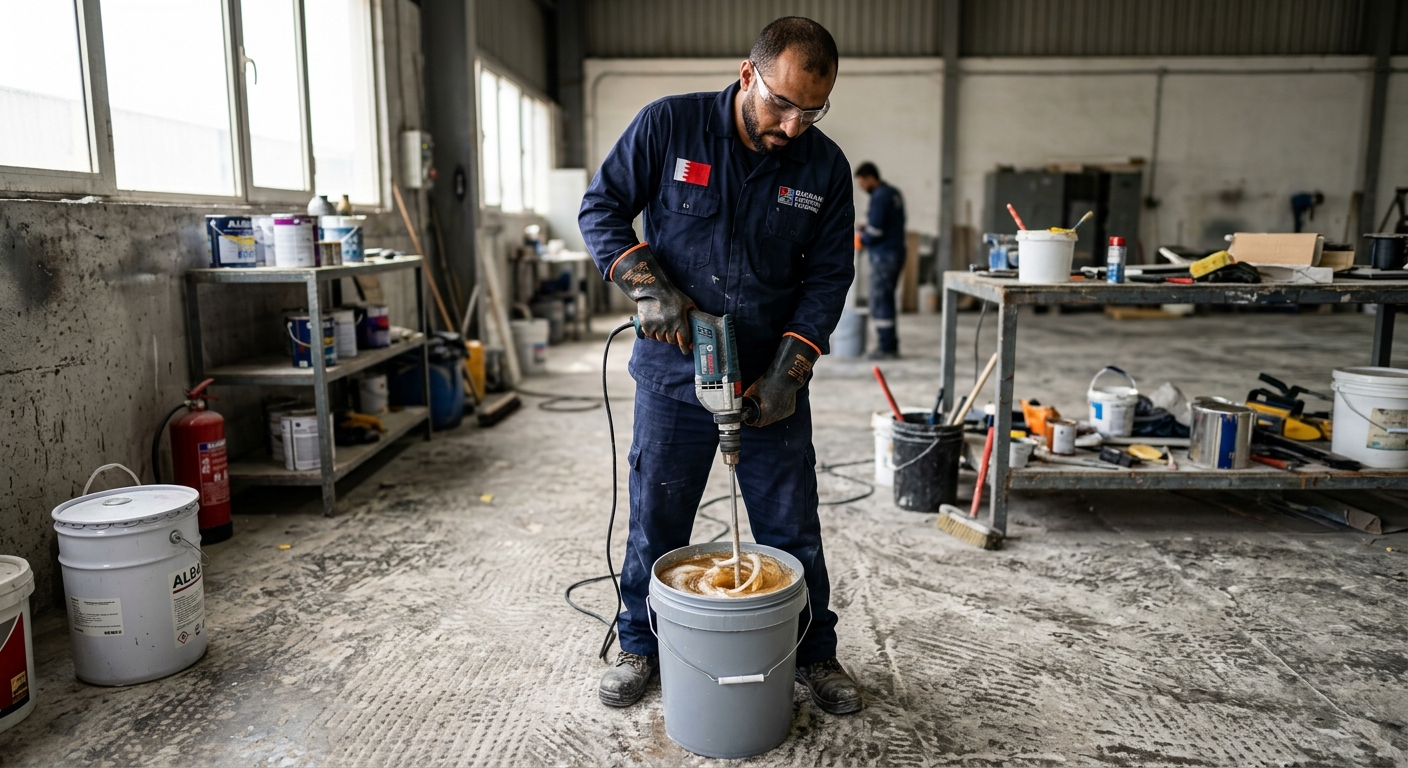
In practice, the chemical reaction between resin and hardener is highly sensitive to ambient temperature. Manufacturers design standard mixing ratios for 20°C environments. When applying these systems in a 40°C Bahraini summer, the chemical reaction accelerates rapidly. Contractors must use "slow-cure" hardeners specifically formulated for the Middle East, or the material will harden inside the mixing bucket before it ever touches your floor.
How the Resin and Hardener Reaction Works
Understanding the physical transformation from liquid to a solid protective barrier helps you evaluate whether your flooring contractor actually knows what they are doing.
Navigating the Exothermic Curing Process in 40°C Heat
The cross-linking process is exothermic, meaning it generates its own heat as it cures. In an air-conditioned Manama mall, a mixed bucket of epoxy might give installers 40 minutes of "pot life" (working time). In an open-air warehouse in Hidd during July, that same bucket generates so much internal heat that it can smoke and flash-cure into a solid block in 12 minutes. This forces experienced crews to mix smaller batches and immediately pour them onto the concrete to dissipate the heat.
Achieving a Permanent Mechanical Bond with Porous Concrete
Epoxy does not stick to concrete like tape; it anchors itself mechanically. When applied correctly, the liquid primer wicks into the microscopic pores and capillary tracts of the concrete slab before it cures. Once it hardens, the epoxy forms millions of microscopic plastic "roots" inside the concrete itself.
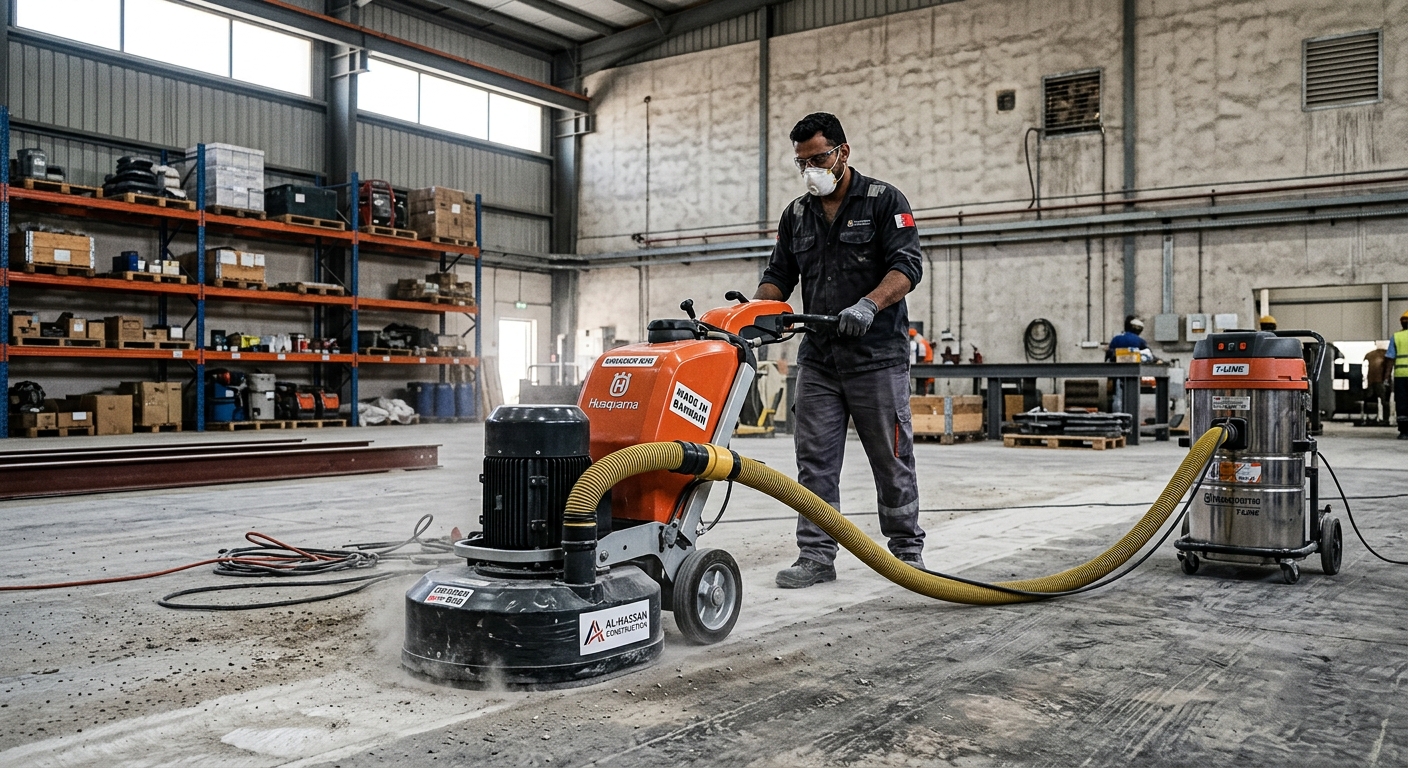
If a contractor tries to apply an epoxy system over smooth, un-prepped concrete—or skips mechanical grinding—these roots cannot form. The floor will inevitably peel.
The Three Essential Layers: Primer, Body Coat, and Topcoat
A functional system balances three distinct chemical layers:
- The Primer: Low viscosity (water-thin) to penetrate deep into the concrete pores.
- The Body Coat: 100% solids epoxy that provides compressive strength (often mixed with quartz sand to handle heavy loads).
- The Topcoat: A specialized chemical layer designed to resist scratching, chemicals, and ultraviolet light.
You give up long-term durability if you eliminate any of these layers to lower the upfront project cost.
Common Misconceptions That Lead to Peeling Floors
Most epoxy failures in Bahrain are entirely predictable. They stem from fundamental misunderstandings of how the material interacts with the local environment.
The Hardware Store 'DIY Kit' Myth vs. Commercial Grade Formulations
What people underestimate is the difference in chemical volume between consumer kits and commercial grade epoxy systems. Hardware store kits are typically 50% water or solvent. As they cure, the liquids evaporate, leaving a microscopic layer (about 3 mils thick) that wears away under standard foot traffic. Commercial systems are "100% solids." What you pour is what stays. They cure at 15 to 30 mils thick, providing the actual structural protection commercial spaces require.
Ignoring Rising Damp in Coastal Areas Like Amwaj and Diyar Al Muharraq
Reclaimed land areas in Bahrain have notoriously high water tables. Moisture vapor constantly travels upward through the concrete slab, seeking to escape. Because epoxy is an impermeable plastic barrier, this moisture gets trapped beneath it. The resulting hydrostatic pressure will literally blow the epoxy off the concrete, causing massive blisters.
If your contractor does not perform a calcium chloride moisture test or apply a specialized moisture vapor barrier (MVB) primer in these coastal areas, your floor is guaranteed to fail.
Confusing Standard Epoxy with UV-Resistant Polyurethane Topcoats
A common surprise for residential property owners is watching their beautiful, bright white garage floor turn a sickly yellow after six months. Standard epoxy resins have zero resistance to ultraviolet (UV) light. When exposed to sunlight from open garage doors or large windows, the polymers degrade and amber.
- When standard epoxy makes sense: Enclosed warehouses, indoor manufacturing, subterranean parking.
- When it fails: Outdoor walkways, open residential garages, sunlit showrooms.
- The tradeoff: To prevent yellowing, you must pay for an aliphatic polyurethane topcoat. It adds cost and requires highly skilled application, but it provides complete UV stability.
Why Choosing the Right System Matters in Bahrain
Connecting the chemical mechanisms to your operational budget reveals why cheap flooring quotes are financially dangerous.
Combating High Humidity and Salty Air Corrosion on Concrete Slabs
In industrial areas like Salman Industrial City, the combination of high humidity and salty air rapidly attacks bare concrete. Once salt penetrates the slab, it corrodes the internal steel rebar, causing the concrete to crack and spall. An impermeable epoxy system acts as a barrier, isolating the structural slab from atmospheric chlorides and saving thousands of Dinars in structural repair costs over a decade.
Meeting Ministry of Works (MoW) Standards for Commercial Spaces
Commercial facilities in Bahrain must adhere to specific safety and hygiene standards. A bare concrete floor in a commercial kitchen or automotive shop will absorb oil, blood, and bacteria, making it impossible to sanitize and leading to municipal fines. Epoxy systems create a non-porous surface. Furthermore, contractors can broadcast aluminum oxide or silica sand into the wet body coat to create a slip-resistant profile that meets local occupational safety requirements.
Calculating True Cost: Analyzing BD 5 vs BD 15 per Square Meter Investments
When comparing contractor quotes, the price disparity usually reflects the chemical volume, not the labor cost.
- The BD 5 to BD 8/sqm quote: Usually involves a single coat of solvent-based epoxy over poorly prepped concrete. It will look good for six months, then require complete mechanical removal and replacement (costing an additional BD 10/sqm).
- The BD 15 to BD 25/sqm quote: Represents a multi-layered, 100% solids system applied after diamond-grinding the concrete.
Choosing the cheaper option means accepting that you will shut down your facility for repairs within a year.
Real-World Epoxy System Applications Around Bahrain
The chemical formulation of your floor must match the physical abuse it will take. There is no universal solution.
Heavy-Duty Trafficking Systems in Sitra Industrial Warehouses
Warehouses operating 3-ton forklifts require high compressive strength. A standard 30-mil epoxy coating will shatter under the point-load of a hard rubber forklift tire turning in place. In these environments, contractors install an epoxy mortar system—troweling a 4mm to 6mm thick mixture of epoxy resin and graded quartz sand. You trade a perfectly smooth finish for a surface that can withstand heavy industrial impact without cracking.
Hygienic Seamless Floors in Manama Food and Beverage Kitchens
In commercial kitchens, the enemy is bacterial growth in corners and joints. Food safety regulations require floors that can be aggressively washed with hot water and harsh degreasers. Here, installers use epoxy to create "coved skirting"—where the floor material curves seamlessly up the wall by 10 centimeters. This eliminates 90-degree corners where dirt accumulates. However, standard epoxy softens under boiling water, so kitchens typically require a specialized urethane cement system rather than traditional epoxy.
UV-Stable Decorative Flake Systems for Saar Luxury Garages
For high-end residential garages, aesthetics matter as much as chemical resistance. Installers broadcast colored vinyl flakes into a wet epoxy body coat until the floor is completely covered, then seal it with a clear, UV-stable polyaspartic or polyurethane topcoat. This hides dust, provides slight slip resistance, and stops hot-tire pickup (where hot car tires melt and peel the floor paint). The tradeoff is a higher installation cost and a highly technical application window, as polyaspartics can cure in as little as 15 minutes.
Conclusion
The crucial realization is that an epoxy system is not a surface paint, but a structural chemical layer permanently bonded to your concrete. The success of this installation relies entirely on proper mechanical preparation, accurate chemical mixing, and adapting to the local climate.
Before approving any flooring quote in Bahrain, demand a professional moisture test to account for the island's high groundwater levels. Ensure the quote explicitly details the mechanical grinding process and specifies a 100% solids material. If you are planning a high-traffic area or a space exposed to sunlight, exploring related solutions like moisture vapor barriers and aliphatic polyurethane topcoats will ensure your investment survives the harsh Gulf climate. A properly specified floor is an upfront investment that pays dividends by eliminating operational downtime for the next decade.