What Is a Metallic Epoxy Resin Floor? (Why It Matters)
Imagine designing a luxury villa in Amwaj Islands or a high-end cafe in Adliya. You face a common architectural dilemma: absorbing the staggering cost of imported marble, or settling for the uninspiring, grid-like appearance of standard ceramic tiles.
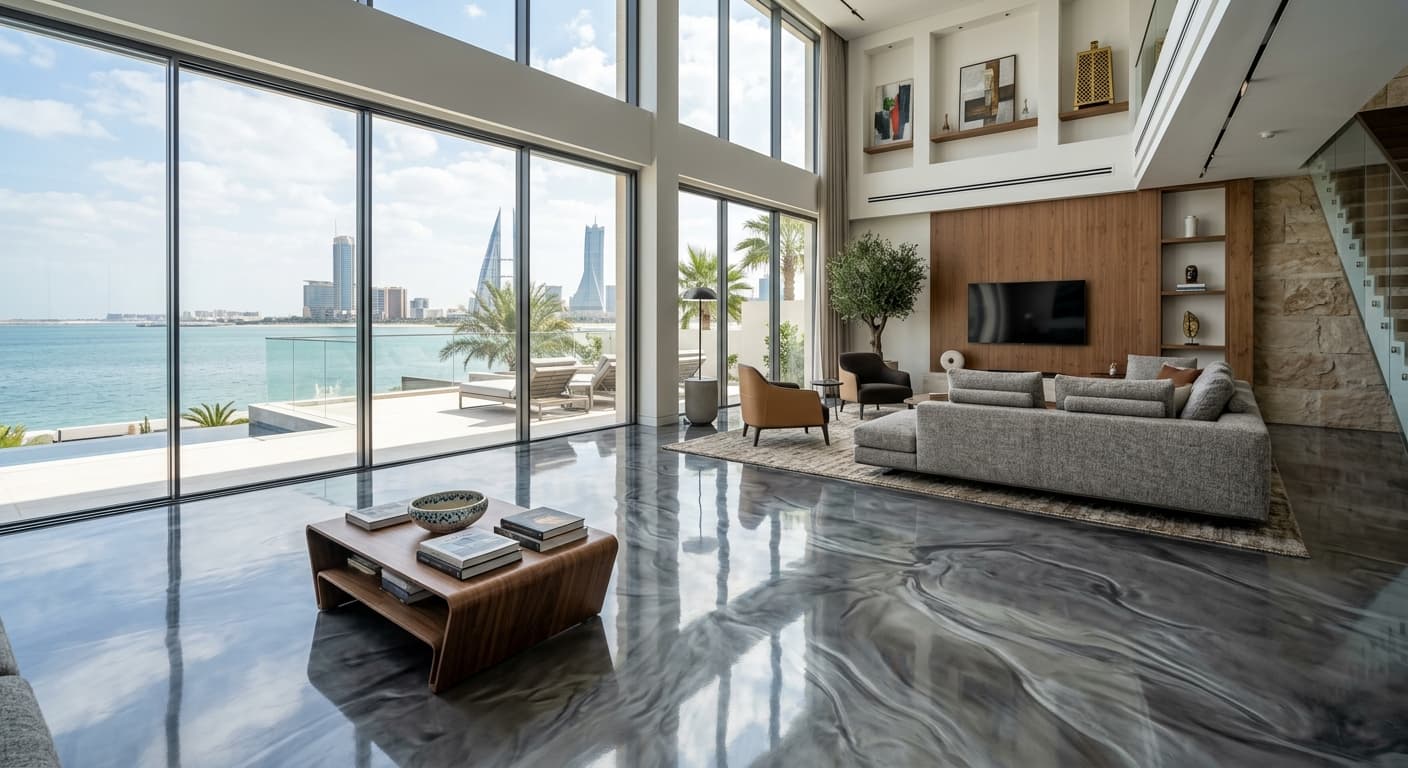
A metallic epoxy resin floor resolves this tension through a multi-layered chemical installation. It combines industrial-grade clear resins with reflective mica pigments, initiating a chemical reaction that creates dynamic, three-dimensional visual effects resembling flowing water, lava, or polished stone. Property owners choose this system when they need a highly customizable, seamless surface that handles heavy foot traffic without the grout maintenance of traditional hardscapes.
However, a metallic epoxy resin floor is highly sensitive to environmental conditions during installation. Understanding the precise chemical reactions and environmental constraints dictates whether you end up with a lifetime architectural masterpiece or a peeling, yellowed disaster under Bahrain's intense climate.
What a Metallic Epoxy Resin Floor Actually Means in Practice
This flooring system is not a paint that dries; it is a two-part polymer that cures. Treating it like a standard floor coating leads to critical failures in adhesion and durability.
The Three-Part Chemical Fusion: Clear Resin, Hardener, and Reflective Mica Powders
The system relies on mixing a specific ratio of epoxide resin with a polyamine hardener, then suspending microscopic mica pigments within that matrix. When these components mix, they cross-link to form a rigid plastic bonded mechanically to the concrete subfloor.
What people underestimate is the required thickness of this fluid layer. To achieve the signature 3D depth, the metallic coat must be poured at a thickness of 2 to 3 millimeters—significantly thicker than standard solid-color epoxy. If the installer stretches the material too thin to save money, the mica pigments cannot flow, resulting in a flat, muddy appearance rather than a dynamic, reflective surface.
Eliminating Grout Lines: The Hygiene and Maintenance Shift
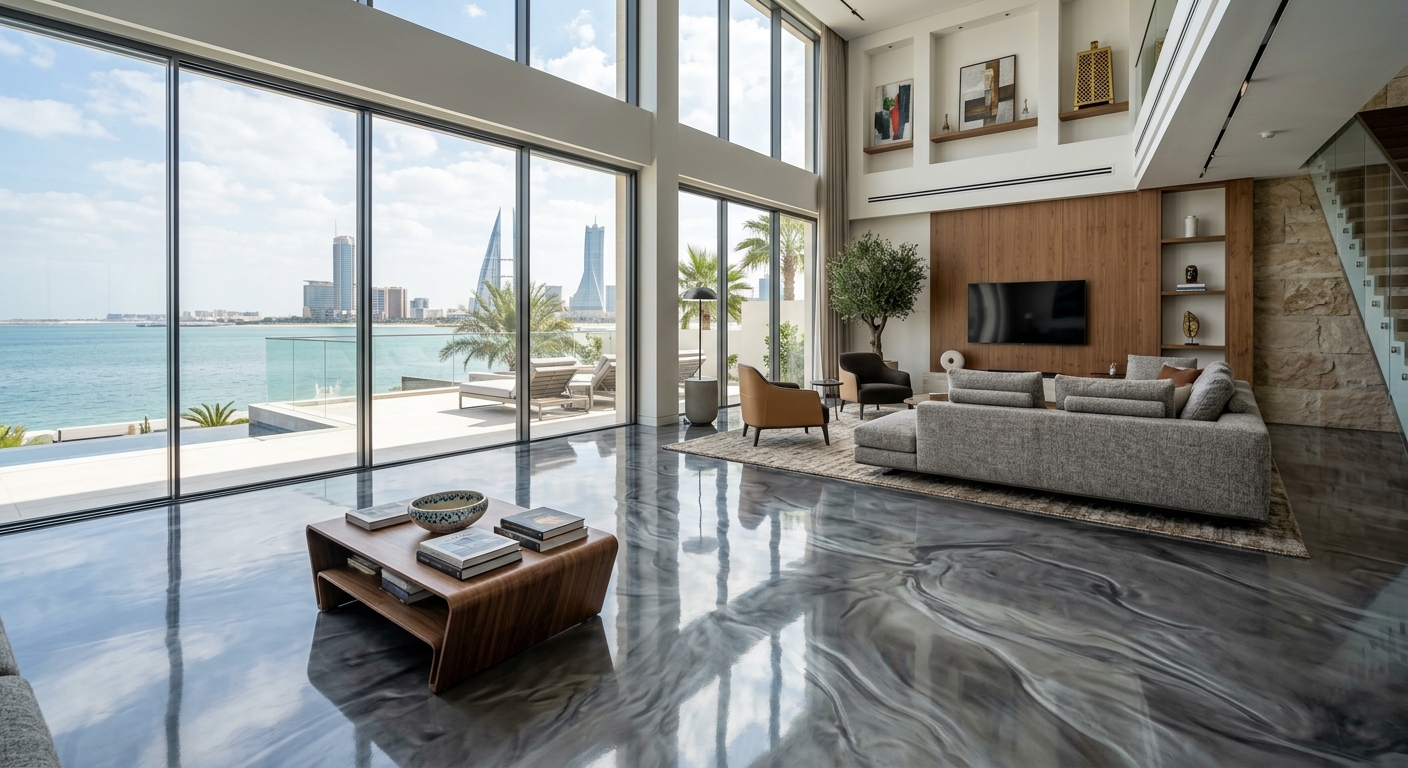
Traditional ceramic or porcelain tiles require grout, which is inherently porous and traps dirt, bacteria, and moisture. A metallic epoxy resin floor completely eliminates these joints, creating a monolithic surface that spans wall-to-wall.
This seamless nature drastically reduces daily maintenance, but it introduces a strict structural tradeoff. Because the epoxy forms a continuous, rigid shell, any movement or cracking in the underlying concrete will immediately telegraph through and crack the epoxy.
When seamless epoxy makes sense:
- Over fully cured, stable concrete slabs with properly treated expansion joints.
- In commercial kitchens, clinics, or cafes where hygiene and rapid cleaning are operational priorities.
When seamless epoxy fails:
- Over existing tiles without a self-leveling underlayment, as the tile grid will eventually ghost through the resin.
- On suspended slabs with high deflection (bounce), where the rigid epoxy cannot flex with the building's movement.
How the 3D Metallic Effect Works
The distinct veining and swirling patterns of a metallic epoxy resin floor are not painted by hand. They are the result of fluid dynamics and exothermic chemical reactions.
Exothermic Curing and Natural Pigment Flow
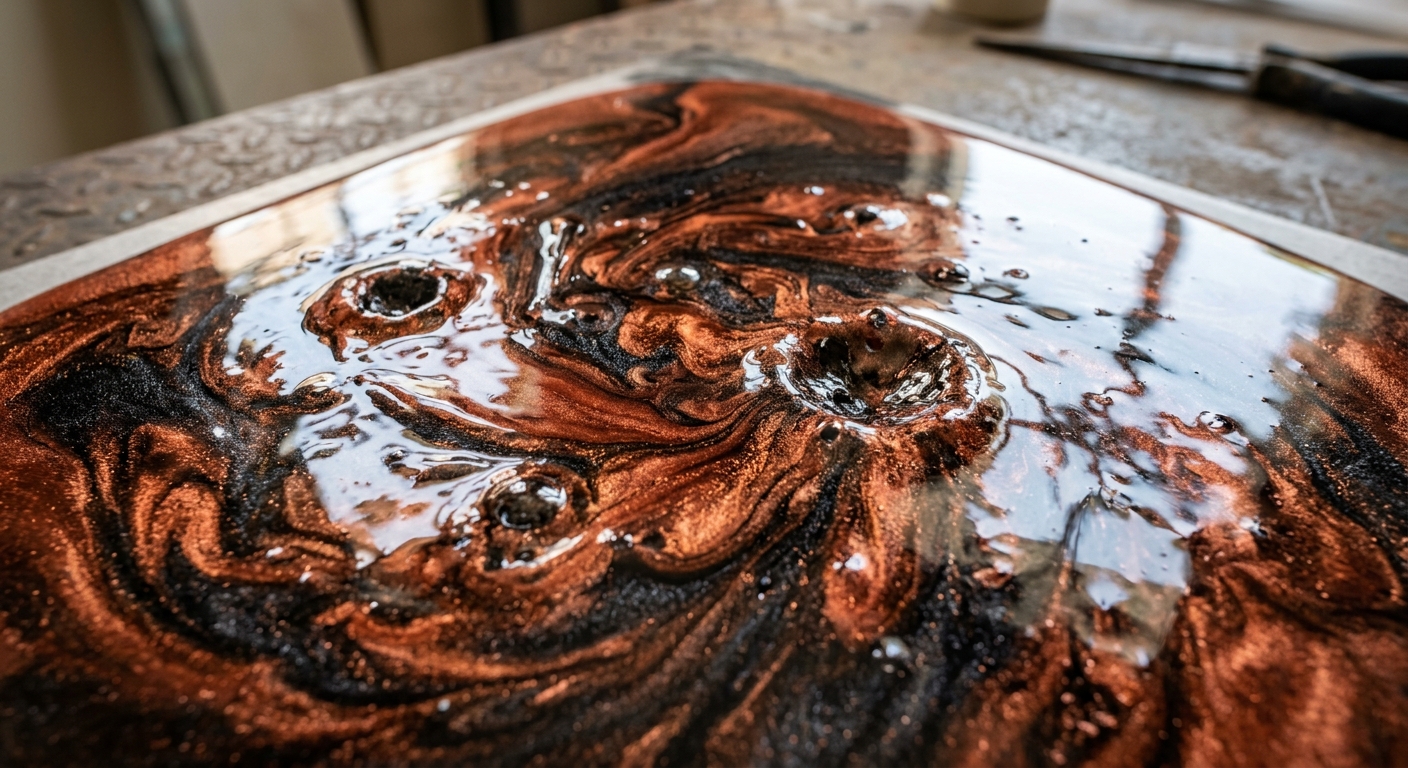
Once the resin and hardener are mixed, the chemical reaction generates significant heat (an exothermic reaction). This heat creates microscopic convection currents within the liquid epoxy. As the material warms and flows across the floor, these currents push and pull the reflective mica pigments, creating natural, organic swirls.
The critical constraint here is the "pot life"—the time before the chemical reaction hardens the liquid. In Bahrain's ambient heat, an installer typically has only 30 to 45 minutes to pour, spread, and manipulate the floor before it locks into place. If the installation crew is too small to manage the square footage within this window, the floor will cure unevenly, leaving visible roller marks and permanent seams between batches.
Manipulating Surface Tension with Solvents
To create specific visual effects like craters, hammered metal looks, or intense veining, installers manipulate the surface tension of the curing epoxy. They do this by misting denatured alcohol or specialized solvents over the wet surface.
The solvent rapidly evaporates, temporarily breaking the surface tension and forcing the metallic pigments to disperse rapidly.
- The tradeoff of chemical artistry: You surrender absolute control. While installers influence the colors and general flow, the exact final pattern is dictated by the chemical reaction. If you require a perfectly symmetrical or highly predictable pattern, metallic epoxy is the wrong choice.
Common Misconceptions About Metallic Epoxy Flooring
False assumptions about how epoxy behaves in Middle Eastern climates routinely lead to ruined investments. What works in a controlled European environment often fails in the Gulf.
The "Scratch-Proof" Myth: Managing Tracked-In Sand
A widespread misconception is that epoxy is impervious to scratching. While it boasts immense compressive strength (handling heavy weights), its surface hardness is vulnerable to abrasion.
In Bahrain, the Shamal winds constantly deposit fine, abrasive sand across entrances and walkways. When people walk over this sand, it acts like 120-grit sandpaper against the epoxy surface. Over a few months, this foot traffic creates micro-scratches that dull the high-gloss finish, leaving dull traffic lanes in busy areas.
To prevent this, you must apply a sacrificial layer of floor wax or, for permanent protection, a clear aliphatic polyurethane topcoat. If an installer quotes a metallic floor without a protective topcoat to win on price, you are guaranteed a dull floor within six months.
The DIY Fallacy: Why 85% Humidity Ruins Uncontrolled Pours
The internet is full of tutorials suggesting metallic epoxy is a simple weekend project. This ignores the severe environmental constraints of chemical curing.
When humidity in Bahrain exceeds 80%, moisture settles on the surface of the uncured epoxy. This causes "blushing"—a chemical reaction that turns the clear, glossy finish into a cloudy, greasy, and structurally weak mess.
Furthermore, epoxy relies entirely on mechanical adhesion. The concrete must be ground with diamond tooling to a Concrete Surface Profile (CSP) of 2 or 3, feeling roughly like medium-grit sandpaper. Simply washing the floor with muriatic acid—a common DIY mistake—does not open the concrete pores sufficiently, leading to massive delamination where the epoxy simply peels off in sheets.
Why This Matters: Practical Implications and Cost Decisions
Understanding the mechanics of a metallic epoxy resin floor directly impacts your budget and longevity expectations.
Budgeting BD 15 to BD 35 per Square Meter
The cost of a proper metallic epoxy installation in Bahrain typically ranges from BD 15 to BD 35 per square meter. This is substantially cheaper than imported Italian marble, which often starts at BD 40 and can exceed BD 80 per square meter before installation.
However, the variance in the epoxy price is driven entirely by subfloor preparation and topcoats.
- A BD 15/sqm quote usually means minimal concrete grinding and no protective urethane topcoat.
- A BD 35/sqm quote includes diamond grinding, a moisture-mitigating primer, a thick metallic build coat, and a UV-stable polyurethane topcoat.
Choosing the cheaper quote almost always results in early failure, making the "budget" option significantly more expensive when you have to grind it off and start over.
Combating UV Yellowing Near High-Exposure Windows
Standard epoxy resins are not UV stable. When exposed to the intense sunlight pouring through large villa windows or commercial storefronts, the chemical bonds degrade. This degradation manifests as "ambering," where a beautiful silver or white metallic floor turns a sickly, permanent yellow within a year.
You cannot stop this by tinting the windows. The only mechanical solution is to specify an aliphatic polyurethane or polyaspartic clear coat as the final layer. These specific topcoats absorb and dissipate UV radiation, protecting the epoxy beneath. If your design includes light colors (whites, silvers, pale blues) in a room with natural light, this topcoat is non-negotiable.
Examples in Practice Across Bahrain
Applying these chemical principles to specific local environments reveals where a metallic epoxy resin floor truly excels.
Seamless Automotive Showrooms in Sitra
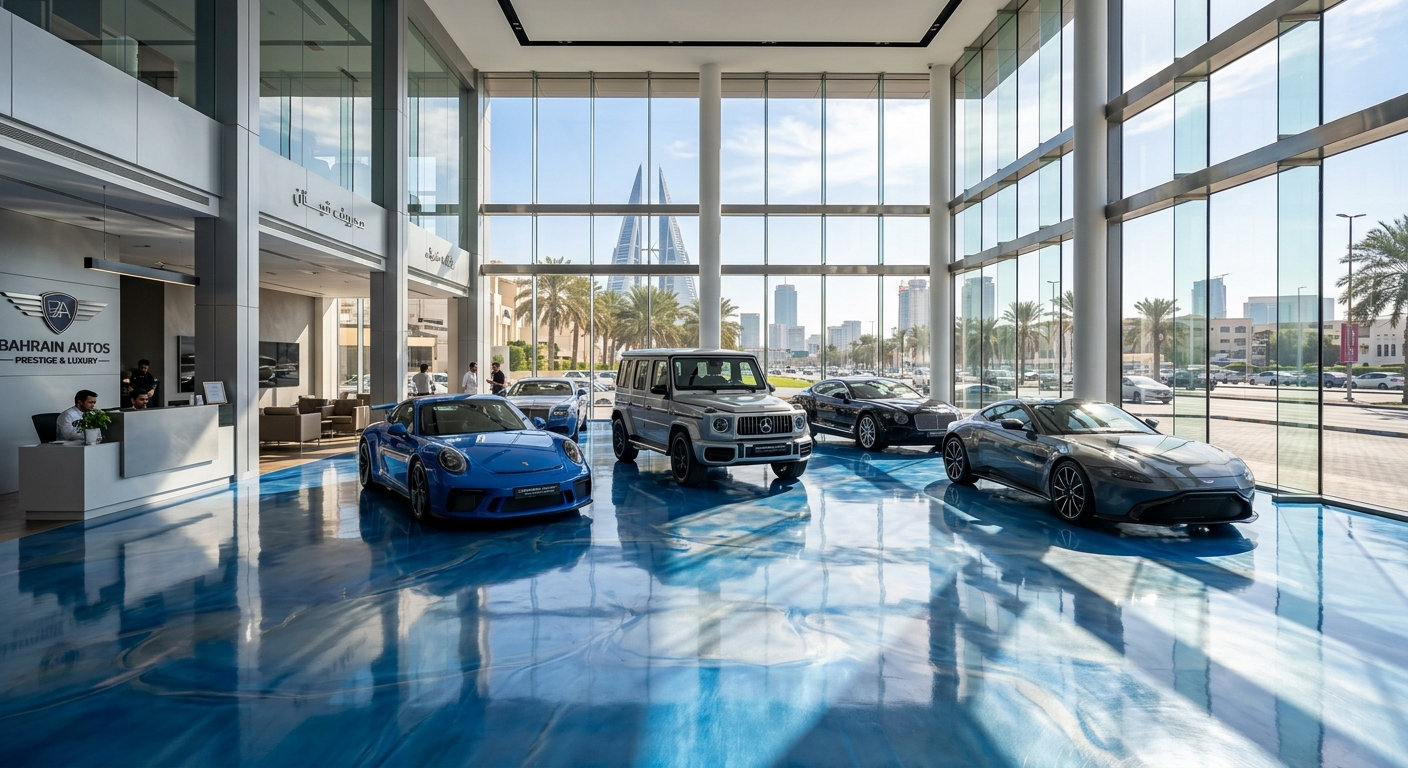
Automotive showrooms require floors that can handle high rolling loads and resist fluid spills. When a vehicle drives onto a floor, the tires generate heat and friction. On cheap paints or low-grade coatings, this causes "hot tire pickup," where the tire literally melts the coating and rips it off the concrete.
Because a properly installed metallic epoxy resin floor cross-links with the concrete and possesses high compressive strength, it easily withstands the rolling weight of a three-ton vehicle. Furthermore, engine oil or brake fluid cannot penetrate the non-porous surface, allowing for simple wipe-down maintenance without permanent staining.
Customizing High-Traffic Majlis Areas and Villa Basements in Riffa
In residential applications, large Majlis areas benefit from the seamless, high-end aesthetics of metallic epoxy without the echoing acoustics of hard marble. However, villa basements in areas like Riffa introduce a hidden failure mode: Moisture Vapor Transmission (MVT).
Because basements are below grade, groundwater exerts hydrostatic pressure against the concrete slab. Moisture vapor forces its way up through the porous concrete. Because epoxy is impermeable, this vapor gets trapped beneath the coating, building pressure until it literally blows the epoxy off the floor in large blisters.
In practice, installing metallic epoxy in a Bahrain basement requires the installer to first conduct a calcium chloride moisture test. If moisture emissions exceed 3 lbs per 1,000 square feet, they must apply a specialized vapor barrier primer before pouring the metallic coat. Skipping this invisible step guarantees total floor failure within a year.
Conclusion
A metallic epoxy resin floor is a dynamic, site-specific chemical installation, not a standardized product you simply unroll or paste down. Its ability to mimic high-end stone without the grout lines makes it a powerful architectural tool, provided you respect the chemistry behind it.
To ensure long-term success and protect your investment, your immediate next step should be hiring a certified local installer who performs rigorous concrete moisture testing. Always demand a written specification that includes mechanical diamond grinding (CSP 2 or 3) and an aliphatic polyurethane topcoat to combat Bahrain's abrasive sand and intense UV exposure. From here, evaluating your subfloor's condition will dictate exactly how much preparation your specific project requires.