4 Showroom Flooring Options That Actually Last in Bahrain
For commercial property owners and retail managers in Bahrain, selecting showroom flooring requires balancing aesthetic demands with brutal environmental realities. High summer temperatures exceeding 45°C, extreme coastal humidity, fine desert dust, and continuous air conditioning create an indoor microclimate that destroys standard commercial flooring in months.
This categorical list evaluates flooring materials strictly on structural survival in Bahrain's climate, heavy load-bearing capacity, and local maintenance availability. We excluded materials highly susceptible to moisture warping and dust retention. Use this guide to match your specific retail environment with a surface engineered to survive it.
How This List Was Created: The Bahrain Climate and Traffic Test
To qualify for this list, a flooring material must survive the specific mechanical and environmental stresses of commercial spaces in Bahrain. We evaluated materials against three non-negotiable failure points.
Thermal Shock and Condensation Resistance (Handling 24/7 AC)
Retail spaces in Manama routinely run air conditioning at 20°C while the exterior wall and ground temperatures exceed 40°C. This temperature differential pulls moisture up through the concrete slab. If the flooring material cannot either breathe (allowing vapor to pass) or completely block moisture without losing adhesion, it will delaminate. We eliminated any showroom flooring that relies on water-soluble adhesives.
Load-Bearing Metrics for Automotive and Heavy Retail
A standard vehicle in a Sitra automotive showroom places roughly 400-500kg of pressure on four specific contact points. Retail shelving units create similar point-load stress. Materials on this list must possess a minimum compressive strength capable of handling static loads without indenting, cracking, or requiring specialized reinforcement pads.
Availability of Specialized Maintenance Teams in Manama
A flooring system fails if you cannot find local technicians to repair it. We restricted this list to materials that established Bahraini commercial contractors can install, maintain, and repair within a 48-hour SLA. If a material requires flying in a specialist from Dubai for basic resurfacing, it fails the operational test.
The 4 Showroom Flooring Materials Engineered for Bahrain
1. Commercial-Grade Porcelain Tile (BD 8-15/sqm): Engineered for Heavy Vehicle Showrooms
Commercial porcelain survives because of its manufacturing process. Fired at temperatures exceeding 1,200°C, the clay vitrifies, resulting in a water absorption rate of less than 0.5%. This makes it entirely impervious to the humidity swings of the Gulf climate.
Why it works: Unlike standard ceramic, through-body porcelain carries its color through the entire thickness of the tile. If a heavy tool drops and chips the surface during a showroom display changeout, the damage remains virtually invisible. It easily supports the static weight of heavy vehicles and machinery without cracking, provided the subfloor is perfectly level.
When it fails: Porcelain is inflexible. If your building's concrete slab settles or shifts—a common issue in reclaimed land areas around Bahrain Bay—the tiles will crack.
What you give up: Acoustic control and joint cleanliness. Hard tiles amplify ambient noise. Furthermore, standard cementitious grout lines will absorb the fine shamal dust typical in Bahrain, turning dark and patchy within six months.
The requirement: You must specify epoxy grout (adding roughly BD 3/sqm to the installation cost). Epoxy grout is non-porous and will not stain from tire dressing or absorb desert dust.
2. High-Build Epoxy Resin (BD 12-25/sqm): Seamless Protection for Industrial Retail
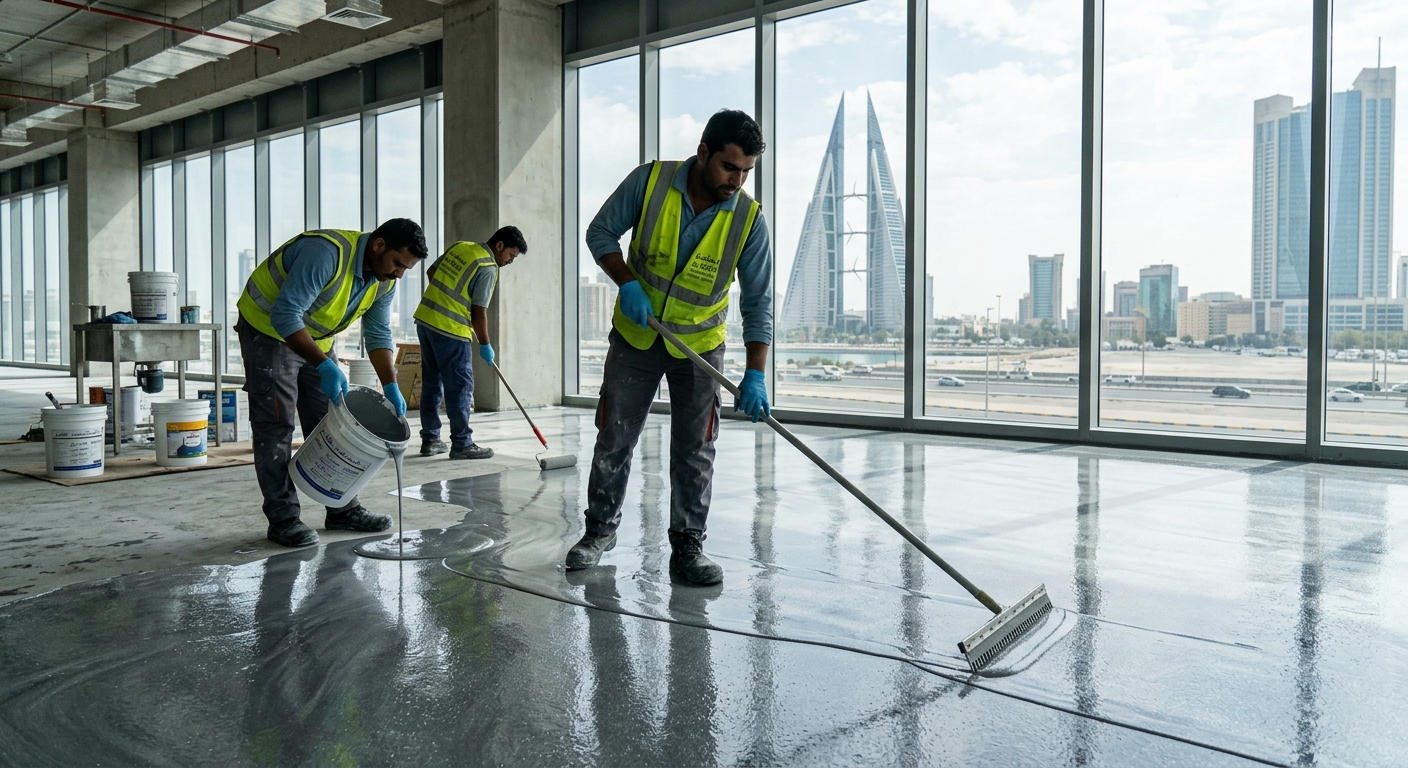
Epoxy is not paint; it is a two-part thermosetting polymer that chemically bonds with the concrete slab. High-build systems (applied at 2mm to 4mm thickness) create a monolithic, seamless surface that isolates the retail environment from the concrete below.
Why it works: Epoxy provides the highest chemical and abrasion resistance of any material on this list. It handles forklift traffic, automotive fluids, and heavy rolling loads without degrading. Because it is seamless, it eliminates the dust-trapping joints that plague tile floors, cutting daily janitorial costs by up to 30%.
When it fails: Epoxy is highly sensitive to slab moisture during installation. If the concrete's relative humidity (RH) exceeds 75%, hydrostatic pressure will build beneath the impermeable resin, causing massive blisters that pop and peel.
What you give up: UV stability. Standard epoxy resins photochemically degrade when exposed to the intense sunlight pouring through large showroom windows, turning a distinct, ugly yellow within a year.
The requirement: For any showroom with exterior windows, you must specify an aliphatic polyurethane topcoat. This adds cost but blocks the UV radiation that causes yellowing.
3. Luxury Vinyl Tile [LVT] (BD 6-12/sqm): Acoustic Control for Climate-Managed Boutiques
Commercial LVT consists of multiple PVC layers topped with a protective polyurethane wear layer. It provides the visual texture of wood or stone without the catastrophic moisture failures associated with natural materials in coastal climates.
Why it works: LVT absorbs sound. In high-end retail boutiques in Seef or Moda Mall, reducing footstep echo creates a premium buying environment. It is also highly modular; if a section is damaged by a dragged display case, a local maintenance team can replace individual planks in minutes without shutting down the store.
When it fails: Heavy point loads destroy LVT. The static weight of a car tire or a high-density storage rack will permanently compress the PVC layers. It also fails if the showroom's HVAC system goes offline for extended periods during the summer, as extreme heat causes the adhesive to release and the planks to peak at the seams.
What you give up: Absolute longevity. Even the highest commercial grades require replacement every 7 to 10 years depending on foot traffic, whereas porcelain or concrete can last decades.
The requirement: You must verify the wear layer thickness. Do not accept anything less than a 0.5mm (20 mil) wear layer for commercial use. Anything thinner will show traffic patterns within the first year.
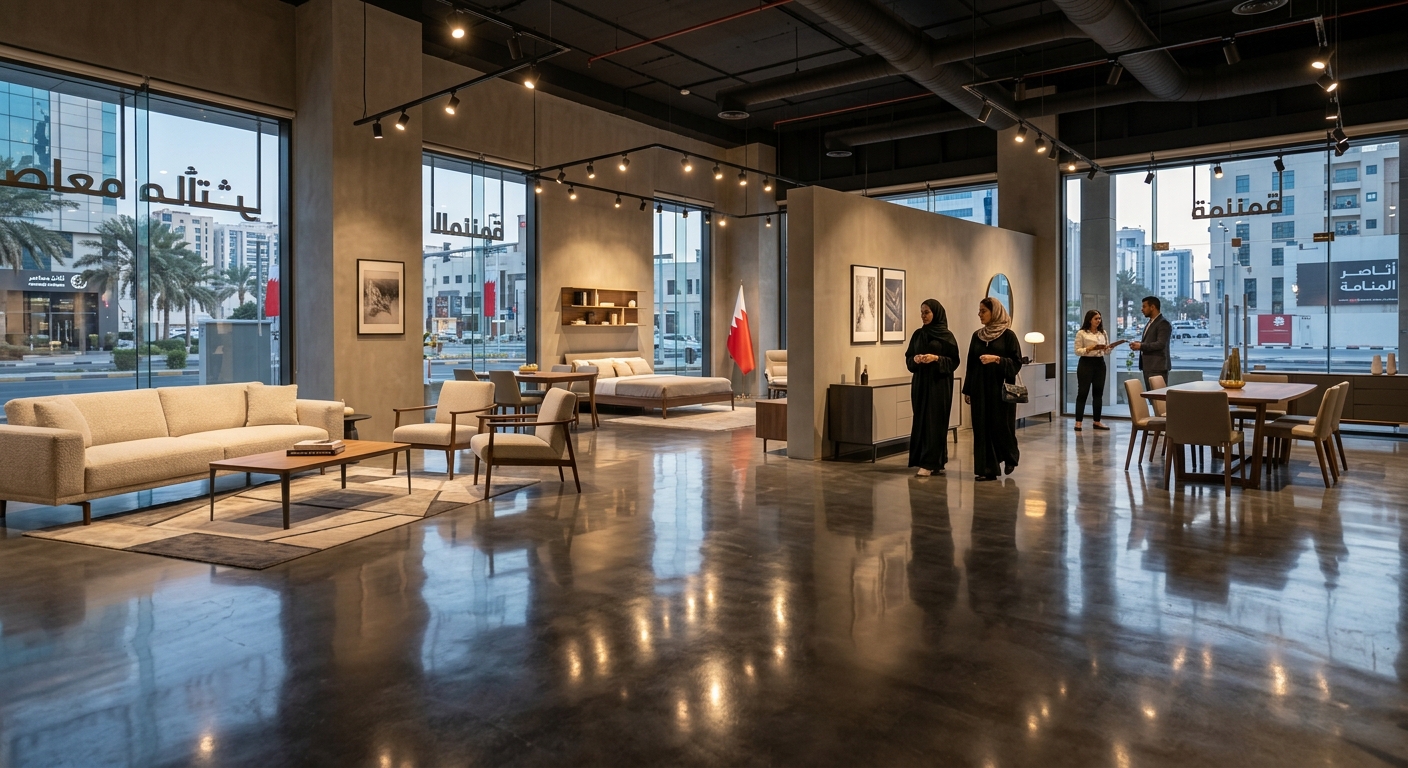
4. Polished Concrete (BD 10-20/sqm): Maximum Durability for Modern Furniture Retail
Polished concrete utilizes the building's existing structural slab. Contractors use progressively finer diamond abrasives to grind the surface, then apply a lithium silicate densifier that triggers a chemical reaction, hardening the surface and preventing concrete dusting.
Why it works: It eliminates the flooring material entirely. There is nothing to delaminate, peel, or warp. The thermal mass of the concrete also helps regulate the showroom temperature, retaining the AC's cooling effect. It handles extreme heavy traffic and provides a minimalist aesthetic ideal for modern furniture or architectural showrooms.
When it fails: Polished concrete relies entirely on the quality of the original pour. If the original slab is poorly mixed, heavily cracked, or uneven, polishing will highlight every flaw rather than hide them.
What you give up: Underfoot comfort and acoustic dampening. This is the hardest, loudest showroom flooring available. It also complicates future electrical planning; moving floor boxes requires trenching the concrete, which permanently scars the visual finish.
The requirement: You must specify a penetrating stain guard. While densified concrete resists water, acidic liquids (like spilled coffee from a customer) will etch the surface instantly if it lacks a protective guard.
What Didn't Make the List: 3 Flooring Types That Fail in Bahrain
Specifying the wrong material results in forced closures and complete replacement within 24 months. These three materials routinely fail in Bahrain's commercial environments.
Natural Hardwood: Inevitable Warping Under Coastal Humidity
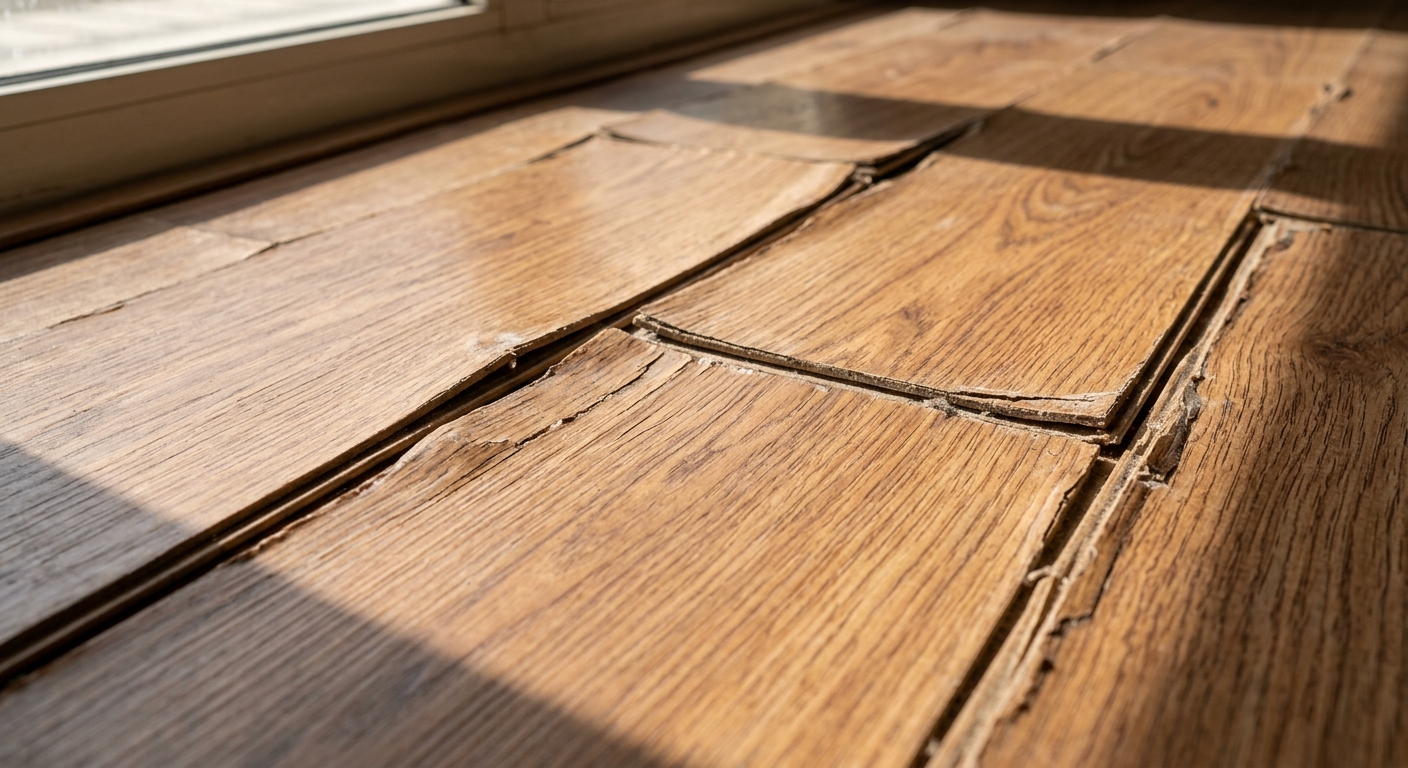
Solid hardwood attempts to equalize its internal moisture with the surrounding air. In Bahrain, where outdoor humidity frequently hits 85% and indoor AC drops it to 40%, the wood undergoes violent expansion and contraction cycles. This causes cupping (edges rising) and crowning (centers rising). Even engineered hardwood struggles when building doors frequently open to the humid exterior.
Broadloom Carpet: Fine Dust Retention and High Maintenance Costs
The fine, talc-like dust carried by the shamal winds penetrates deep into carpet fibers. In a commercial setting, standard vacuums cannot extract this particulate. The dust acts as a microscopic abrasive, cutting the carpet fibers at the base every time a customer steps on it. The carpet will "ugly out" (lose its texture and color) long before it technically wears out.
Standard Laminate Flooring: Swelling from AC Condensation Leaks
Laminate flooring relies on a High-Density Fiberboard (HDF) core. While the top wear layer resists scratches, the seams are highly vulnerable to moisture. A single weekend where an AC unit leaks condensation onto the floor will cause the HDF core to absorb the water and swell permanently. The edges will peak, creating a trip hazard that cannot be repaired, only replaced.
How to Choose from This List: Matching Material to Showroom Type
Selecting your showroom flooring requires looking past the initial installation quote and analyzing the operational realities of your building.
Calculating the 5-Year Total Cost of Ownership in BD
Initial square meter pricing deceives buyers. A BD 10/sqm porcelain tile floor might cost BD 18/sqm once you factor in floor leveling compounds, epoxy grout, and specialized labor. Conversely, a BD 20/sqm epoxy floor requires zero grout maintenance and reduces daily janitorial labor, often making it cheaper over a 5-year operational window.
When comparing quotes, force contractors to include the cost of subfloor preparation. In Bahrain, commercial slabs are rarely poured flat enough to accept large-format porcelain or LVT without expensive self-leveling underlayment.
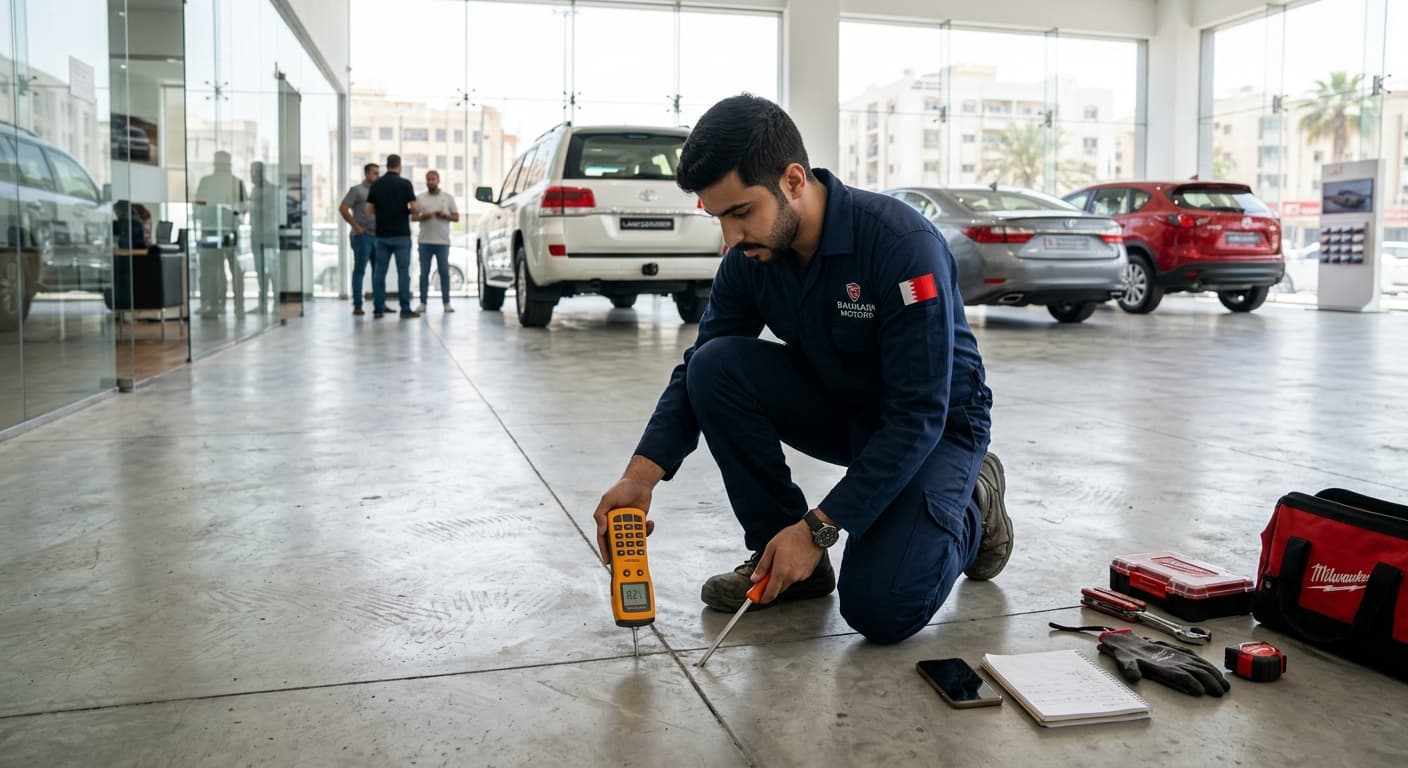
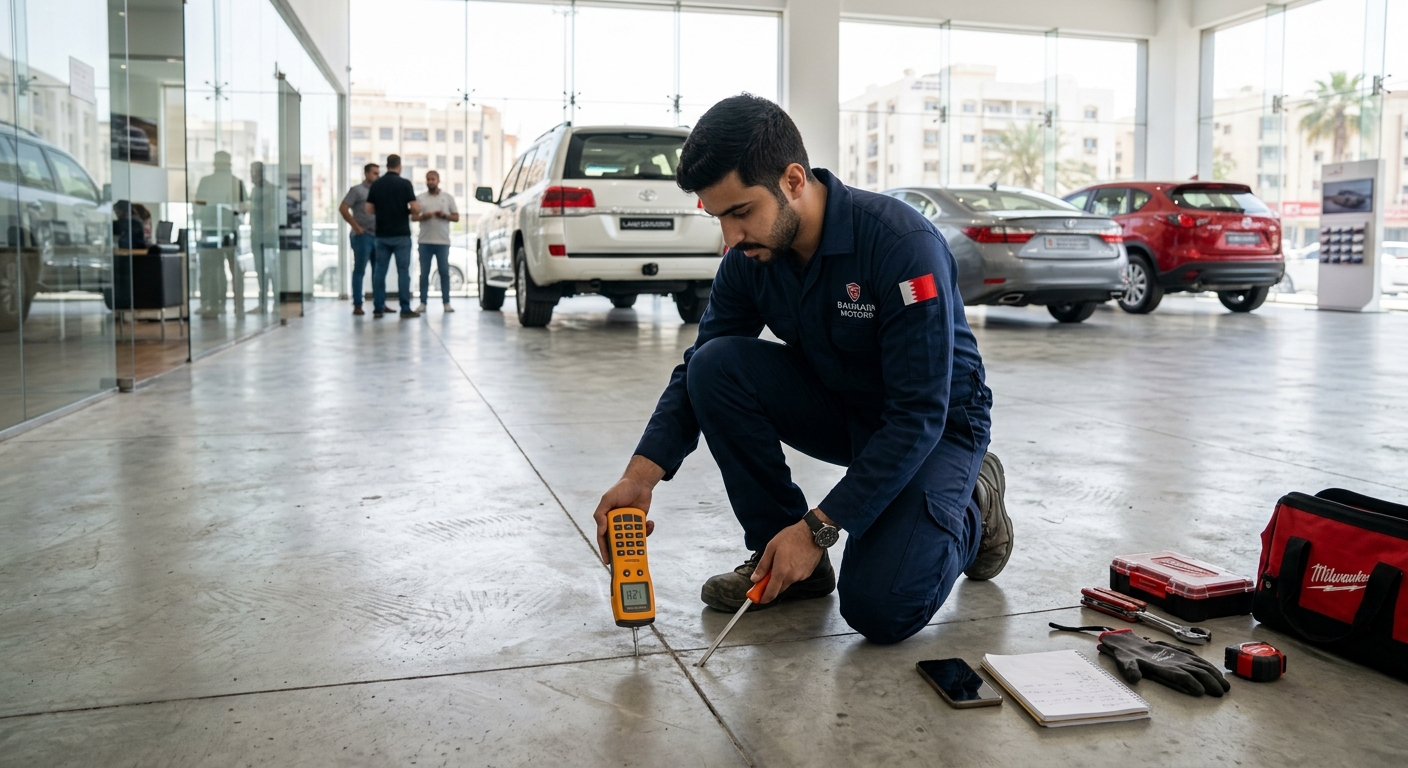
Assessing Your Slab Moisture and HVAC Reliability Before Installation
Do not sign a flooring contract without testing the concrete slab first.
If your HVAC system is prone to failure, or if you turn the AC off completely at night to save on electricity, LVT and Epoxy will fail due to thermal expansion and moisture vapor transmission. In buildings with unreliable climate control, Porcelain Tile and Polished Concrete are your only viable options.
Conclusion
Match your selection strictly to your operational demands: High-Build Epoxy for automotive loads, LVT for climate-controlled boutiques, Porcelain for high-traffic traditional retail, and Polished Concrete for minimalist showrooms.
This baseline criteria remains accurate unless Bahrain's commercial building codes regarding slip resistance change. Your immediate next step is commissioning a local flooring contractor to conduct an ASTM F2170 relative humidity (RH) test on your existing concrete slab. Do not purchase a single square meter of material until you know exactly how much moisture is moving through your floor.