What Is Polyurethane Floor Coating? (And When to Use It)
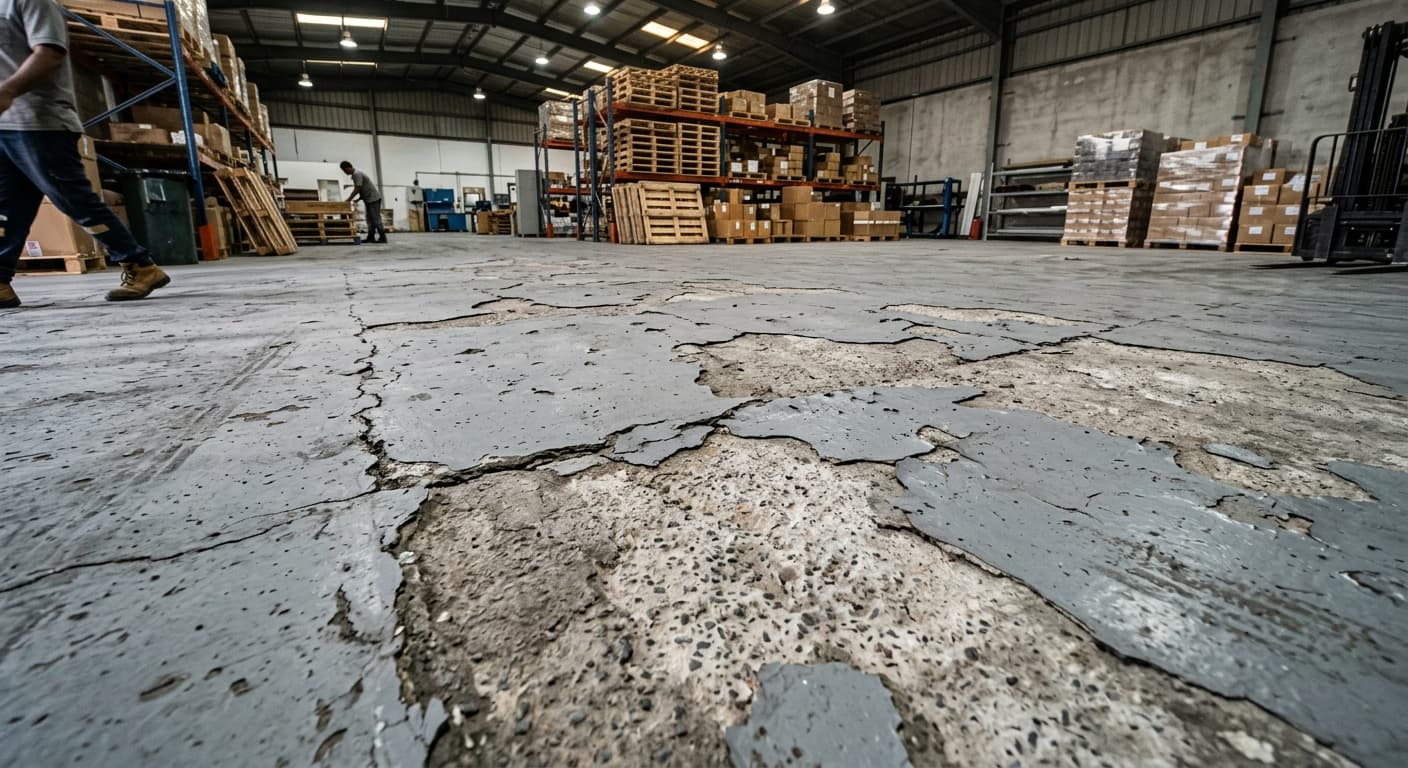
Imagine running a busy food processing facility in Sitra, only to watch your expensive new factory floor crack, blister, and peel after just three months of daily steam cleaning. This catastrophic failure happens when facility managers install rigid flooring in environments that experience extreme, rapid temperature changes.
A polyurethane floor coating prevents this failure by acting as a highly elastic, thermosetting polymer layer. It absorbs heavy physical impacts and expands seamlessly alongside your concrete during extreme temperature shifts. Facility managers and homeowners usually evaluate this solution when deciding whether to pay a premium for polyurethane or stick with traditional epoxy.
Understanding the specific chemical flexibility of a polyurethane floor coating prevents costly flooring failures, especially in environments exposed to Bahrain's intense summer heat, high humidity, and heavy industrial use.
What Polyurethane Floor Coating Actually Means
To understand why this material performs differently than standard concrete sealers, you must look at how it manages physical stress. The core advantage of polyurethane is not its hardness, but its ability to deform under pressure and return to its original shape.
The 'Rubber-Like' Elasticity Principle
Concrete is porous and entirely rigid. When a three-ton forklift drops a loaded pallet in a Salman Industrial City warehouse, the kinetic energy transfers directly through the floor surface into the concrete slab.
If you have a brittle coating—like standard epoxy—that energy shatters the chemical bond, creating micro-cracks that eventually chip away. Polyurethane acts as a shock absorber. The polymer chains stretch to absorb the impact energy, deforming slightly before snapping back into place. This elasticity prevents the kinetic energy from reaching and fracturing the underlying concrete substrate.
If your facility handles heavy, moving impacts rather than just static storage weight, a rigid floor will fail within the first year of operation.
Thermal Shock Resistance in 50°C Environments
Materials expand when heated and contract when cooled. In Bahrain, an industrial floor might sit at 22°C under air conditioning, but near loading bays or uninsulated zones, surface temperatures can easily exceed 50°C during summer afternoons.
When concrete expands under heat, the coating bonded to it must expand at the exact same rate. If the coating is too rigid, the expanding concrete literally tears it apart from the bottom up, resulting in massive peeling. Polyurethane systems can achieve over 300% elongation before breaking. This allows the coating to stretch and shrink perfectly in sync with the concrete slab beneath it, entirely eliminating thermal shear stress.
How the Polyurethane Curing Process Works
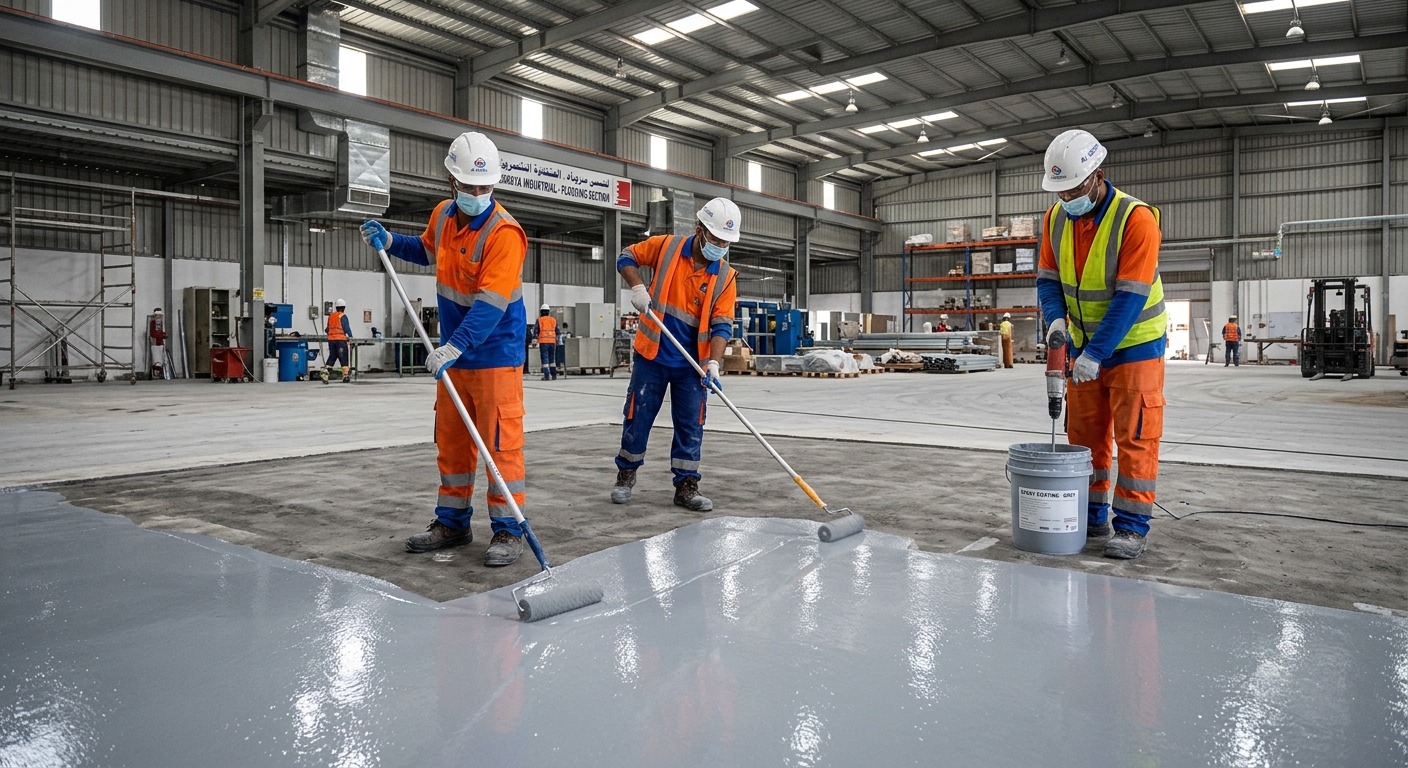
Applying this flooring is not like painting a wall. The liquid you pour out of the bucket is not the final product; it is a live chemical reaction that builds a structural layer on top of your concrete.
The Chemical Cross-Linking Reaction Explained
When the liquid polyurethane resin mixes with its specific hardener (an isocyanate), it triggers a chemical process called cross-linking. The short, liquid molecules bind together to form massive, tightly woven three-dimensional chains.
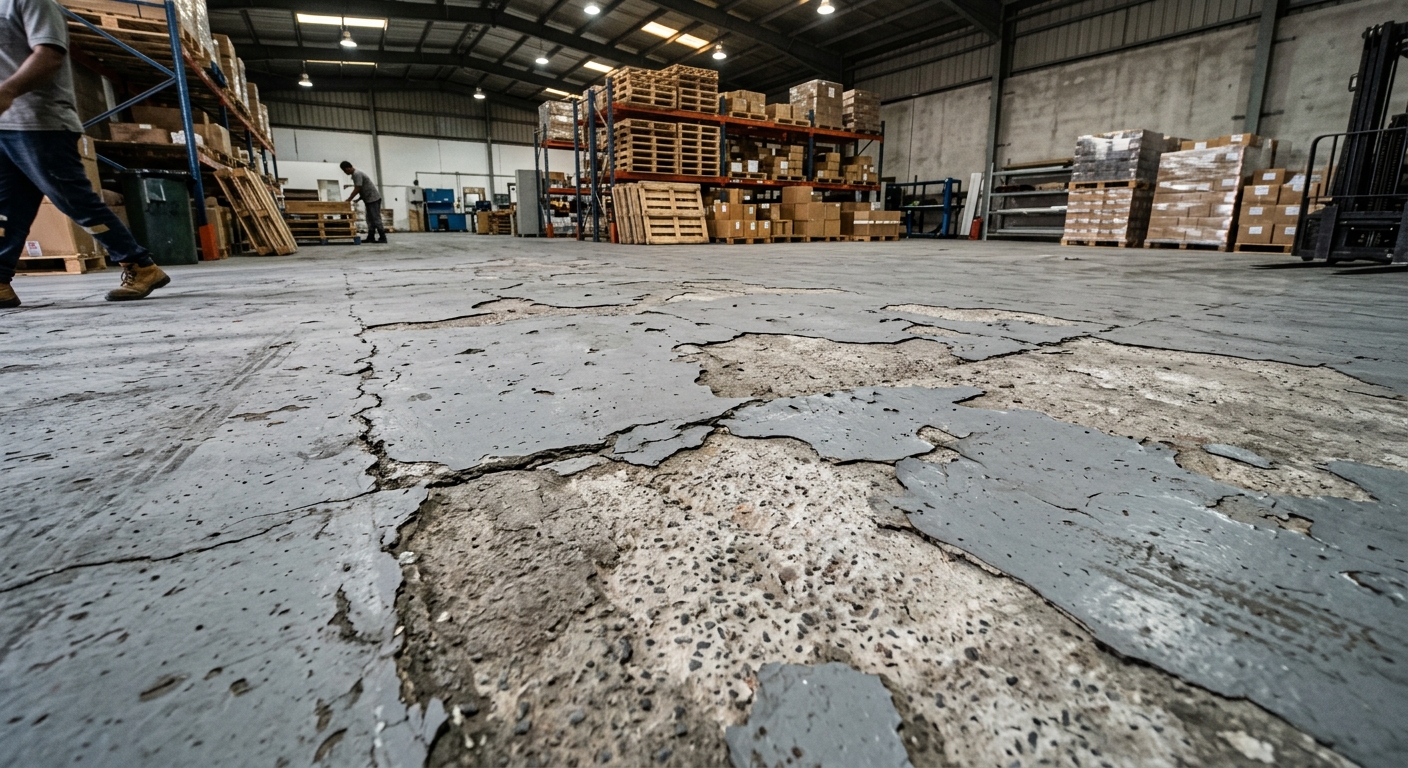
Because polyurethane has a low viscosity before it cures, it seeps deeply into the open pores of prepared concrete. When the cross-linking occurs, the polyurethane doesn't just sit on top of the slab; it physically anchors itself inside the concrete matrix. If a contractor fails to properly grind or shot-blast the concrete to open these pores before pouring, the cross-linking happens exclusively on the surface, guaranteeing the floor will peel up under the tires of the first forklift that turns a tight corner.
Moisture-Curing Dynamics in High-Humidity Gulf Climates
Polyurethane reacts aggressively with moisture. In Bahrain, where August humidity regularly exceeds 80%, this creates a significant operational hazard during installation.
The moisture in the air acts as an unmeasured catalyst, accelerating the cross-linking reaction. If contractors use standard polyurethane formulations during a humid Gulf summer without adjusting the chemical mix, the floor will cure too fast, trapping carbon dioxide gas inside the liquid. This creates hundreds of tiny, hardened bubbles across the surface of your floor, ruining both the aesthetic and the structural integrity. In high-humidity conditions, you must specify moisture-tolerant polyurethane formulations or strictly control the ambient climate during the 24-hour curing window.
Common Misconceptions About Polyurethane Floors
Facility owners routinely waste thousands of dinars by misunderstanding the operational differences between various industrial coatings. Choosing the wrong chemistry for your specific operational constraints guarantees premature failure.
The 'Epoxy and Polyurethane Are Interchangeable' Myth
The most expensive mistake facility managers make is assuming epoxy and polyurethane are just two different brands of the same solution. They serve entirely different mechanical purposes.
- Choose Epoxy when: You need extreme compressive strength. If you are building an aircraft hangar or a warehouse with massive, static storage racks, epoxy's rigid hardness supports heavier dead weight without indenting.
- Choose Polyurethane when: You need impact resistance and chemical defense. If your floor faces falling tools, heavy forklift traffic, lactic acid from dairy processing, or thermal shock, polyurethane will survive where epoxy will shatter.
If you install a polyurethane floor coating in a facility that only requires static load bearing, you overpay for flexibility you don't need. If you install epoxy in a dynamic, high-impact environment, you will pay for a full floor replacement within 24 months.
Assuming Faster Cure Times Mean Easier Application
Polyurethane generally cures much faster than epoxy, often allowing a facility to return to full operation in 48 hours rather than five days. However, faster cure times drastically reduce the "pot life"—the amount of time the mixed chemicals remain liquid in the bucket.
In practice, a fast pot life (sometimes as short as 15 minutes) turns application into a high-stakes logistical sprint. If a contractor mixes too much material at once, it will physically harden inside the mixing bucket before it can be poured and rolled. You must ensure your flooring contractor has a large enough crew to maintain a "wet edge" continuously; if they stop to mix a new batch and the poured edge cures, you will be left with a permanent, visible seam that represents a structural weak point.
Why Choosing Polyurethane Matters for Your Facility
The decision to install polyurethane comes down to protecting the structural integrity of your concrete slab and managing long-term maintenance budgets.
Preventing Concrete Spalling Under Heavy Forklift Traffic
When a forklift with hard polyurethane wheels constantly drives over the same path, it creates microscopic vibrations. Over time, these vibrations weaken the top layer of bare concrete, causing small chunks to break away—a process called spalling.
Once spalling begins, every forklift tire impact deepens the crater, eventually destroying the vehicle's suspension and slowing down warehouse operations. A polyurethane floor coating prevents spalling by acting as a flexible bridge over the concrete. It absorbs the high-frequency vibrations from the forklift tires, distributing the mechanical stress across a wider surface area so the concrete below remains entirely undisturbed.
Calculating Long-Term ROI: Evaluating the BD 12-25 per Sqm Installation Cost
In the Bahrain market, a high-quality polyurethane system typically costs between BD 12 and BD 25 per square meter installed, depending on the thickness and condition of the concrete. Traditional epoxy often prices lower, ranging from BD 8 to BD 15 per square meter.
Looking strictly at the upfront quote leads to bad financial decisions. If you choose epoxy for a wet-processing environment to save BD 5 per square meter, the thermal shock will crack the floor. You will then have to pay BD 5 per square meter for demolition and grinding, plus the BD 15 per square meter to finally install the correct polyurethane system. Paying the premium for polyurethane upfront is a defensive financial strategy to avoid shutting down your facility for a week to fix a failed floor.
Concrete Examples of Polyurethane Coating in Action
Abstract chemical properties only matter when applied to specific operational problems. Here is where polyurethane is the only technically sound choice.
Food Processing Plants Requiring 120°C Steam Cleaning
Hygiene standards in commercial food processing require regular washdowns with pressurized steam reaching up to 120°C.
When 120°C steam hits a 20°C floor, the surface undergoes violent, instantaneous thermal expansion. A rigid epoxy floor cannot expand fast enough and will immediately debond from the concrete, creating hollow pockets where dangerous bacteria can breed. A highly elastic polyurethane floor coating expands instantly with the heat and contracts back to its original state as the floor cools, maintaining a seamless, hygienic, and waterproof barrier.
Outdoor Car Park Decks Exposed to Intense UV Rays in Manama
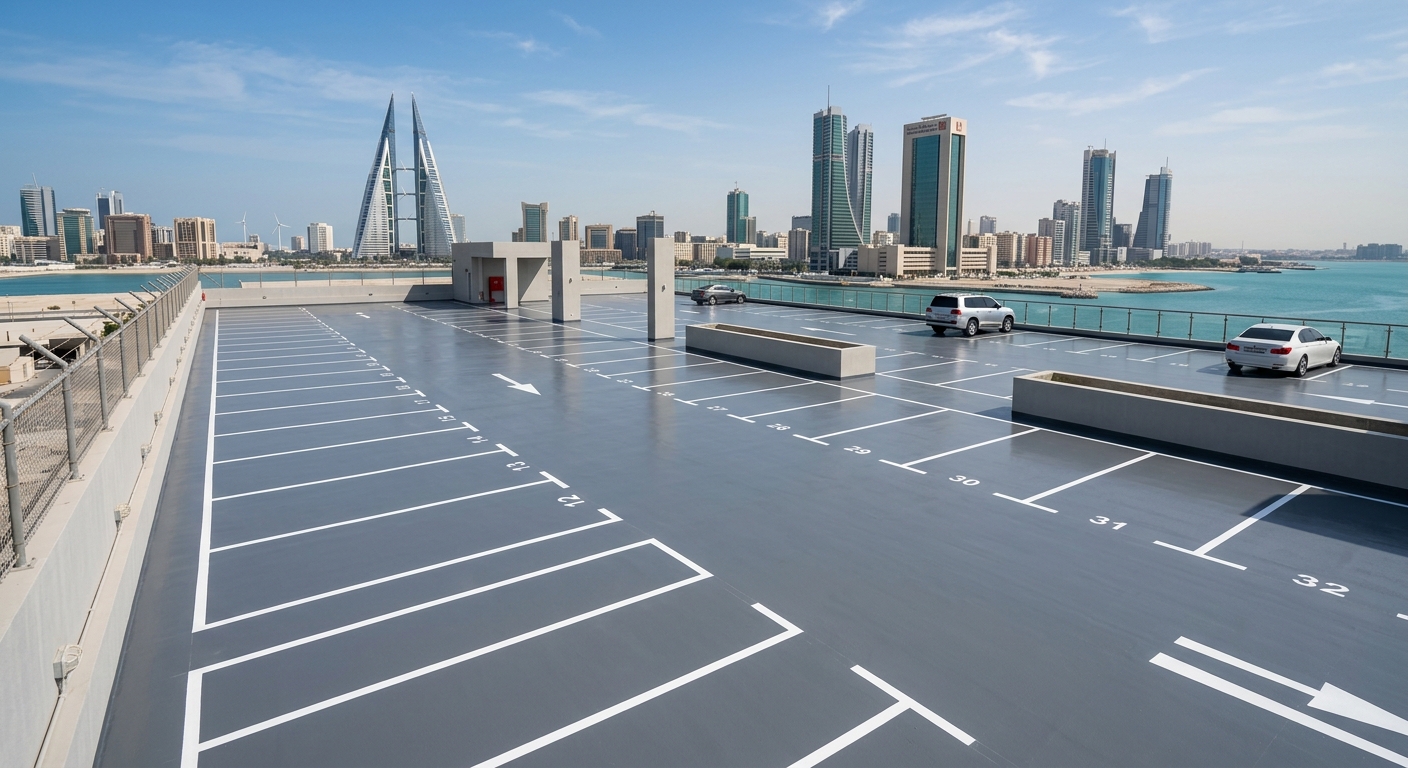
If you are coating an exposed rooftop car park deck in Manama, the flooring must survive heavy vehicle abrasion and relentless ultraviolet (UV) radiation from the sun.
This introduces a critical tradeoff within polyurethane chemistry itself: Aromatic vs. Aliphatic systems.
- Aromatic Polyurethane: Highly durable but UV-sensitive. If used outdoors, the sun's UV rays will break down the chemical bonds on the surface, causing the floor to turn a chalky yellow within months. It should only be used indoors.
- Aliphatic Polyurethane: Formulated specifically for UV stability. It costs significantly more than aromatic versions but will maintain its color, gloss, and structural integrity under direct Bahrain sunlight for years.
If your contractor quotes a suspiciously cheap price for an outdoor deck coating, they are likely trying to use aromatic polyurethane. It will fail aesthetically before the end of the first summer.
Conclusion
A polyurethane floor coating is not just heavy-duty paint; it is a flexible, chemical armor designed to move with your building. It survives heavy physical impacts, aggressive chemical spills, and rapid temperature swings that would shatter rigid alternatives.
You should invest in polyurethane if your facility faces thermal shock from steam cleaning, outdoor UV exposure, or heavy moving impacts from industrial equipment. If your space is strictly indoors, climate-controlled, and only requires heavy static load bearing, traditional epoxy remains the more cost-effective choice.
Before making a final decision, require your flooring contractor to perform a concrete moisture vapor transmission test. Even the best polyurethane system will fail if hydrostatic pressure from groundwater pushes up through the concrete slab, pushing the coating off from underneath. Always solve underlying moisture issues before pouring your first layer of resin.